
Setenil de las Bodegas
Setenil de las Bodegas: the town built beneath the rocks
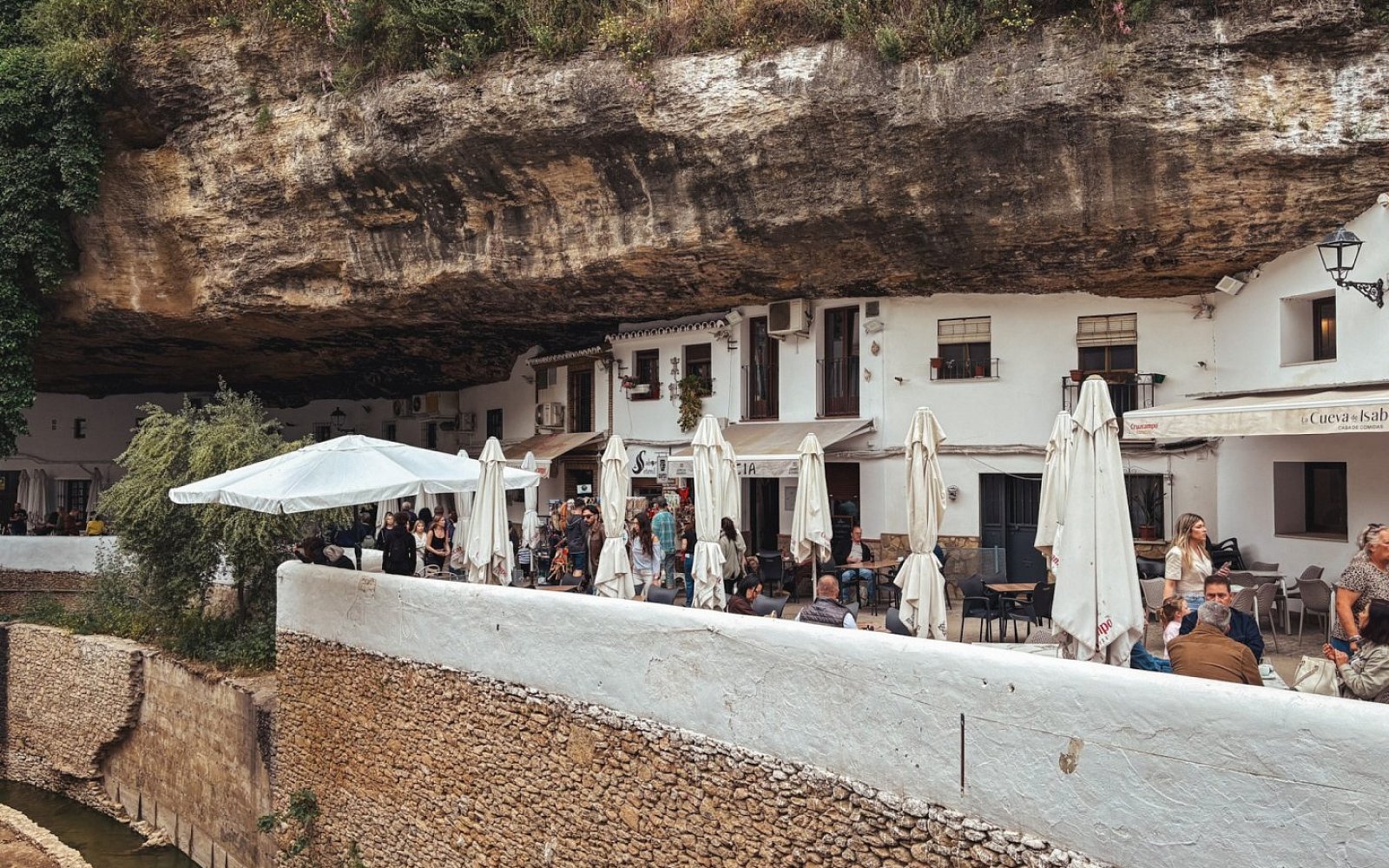
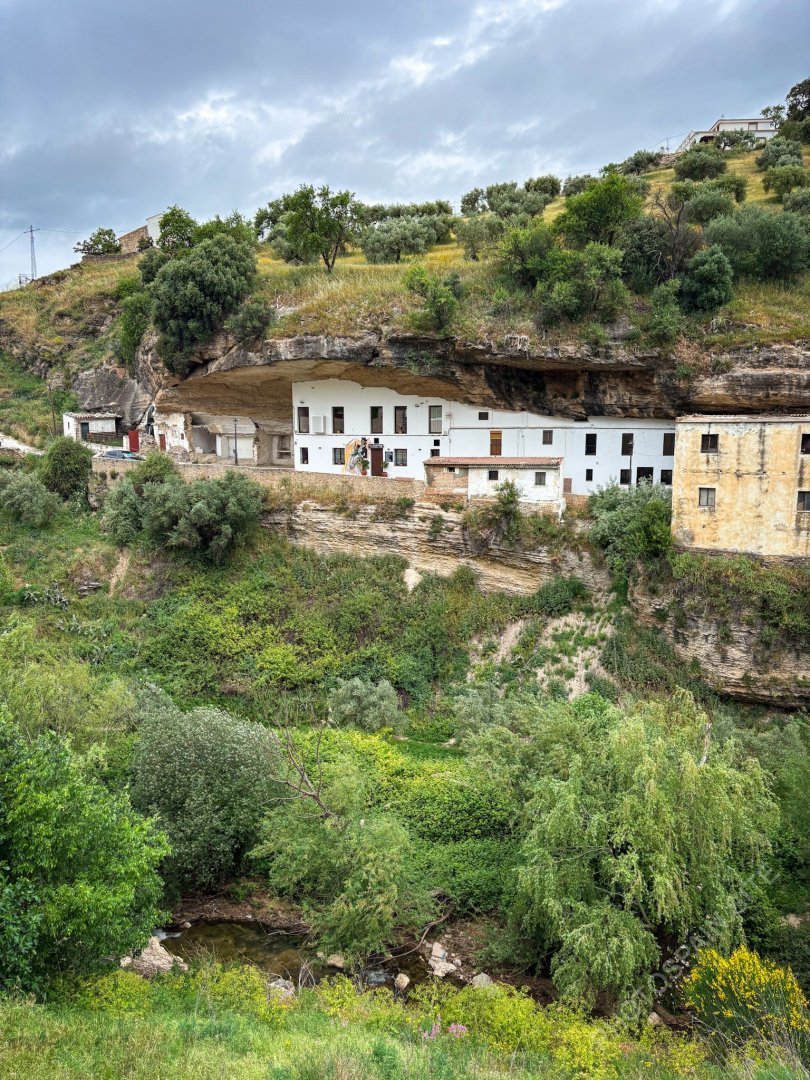
Setenil de las Bodegas is a small white town in the province of Cádiz that is hard to confuse with anywhere else in Andalusia. Here, houses are literally built into enormous limestone cliffs, while some streets run beneath natural rock overhangs.
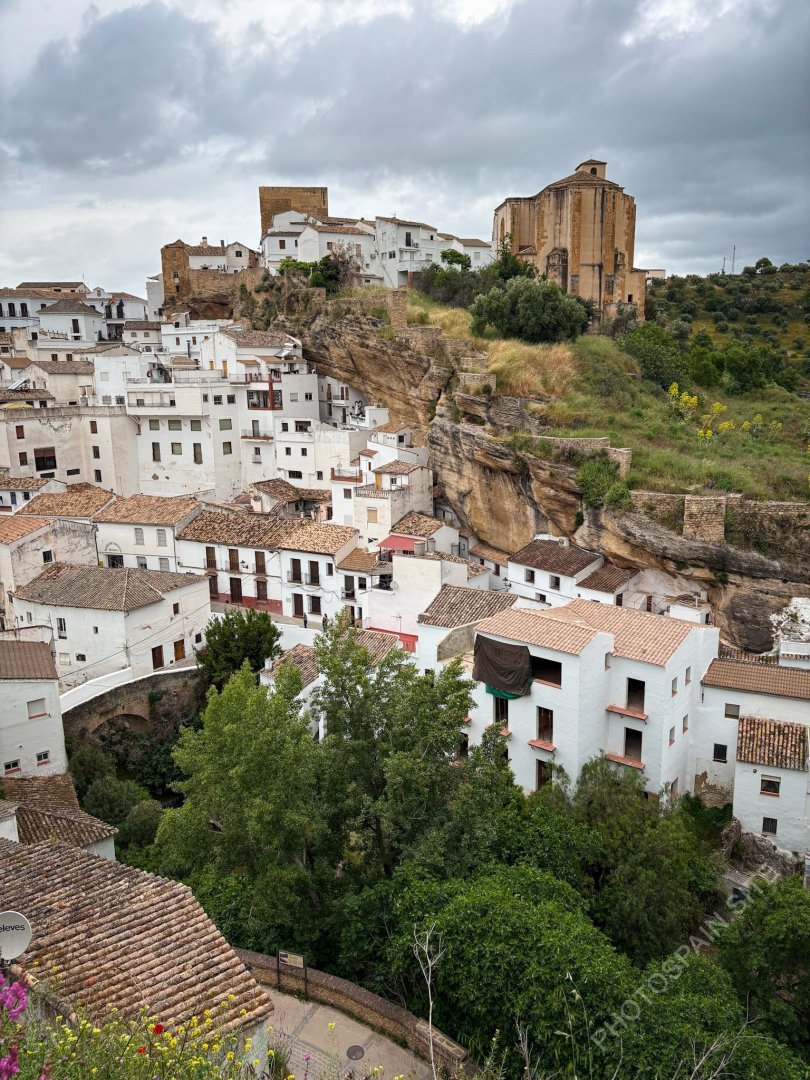
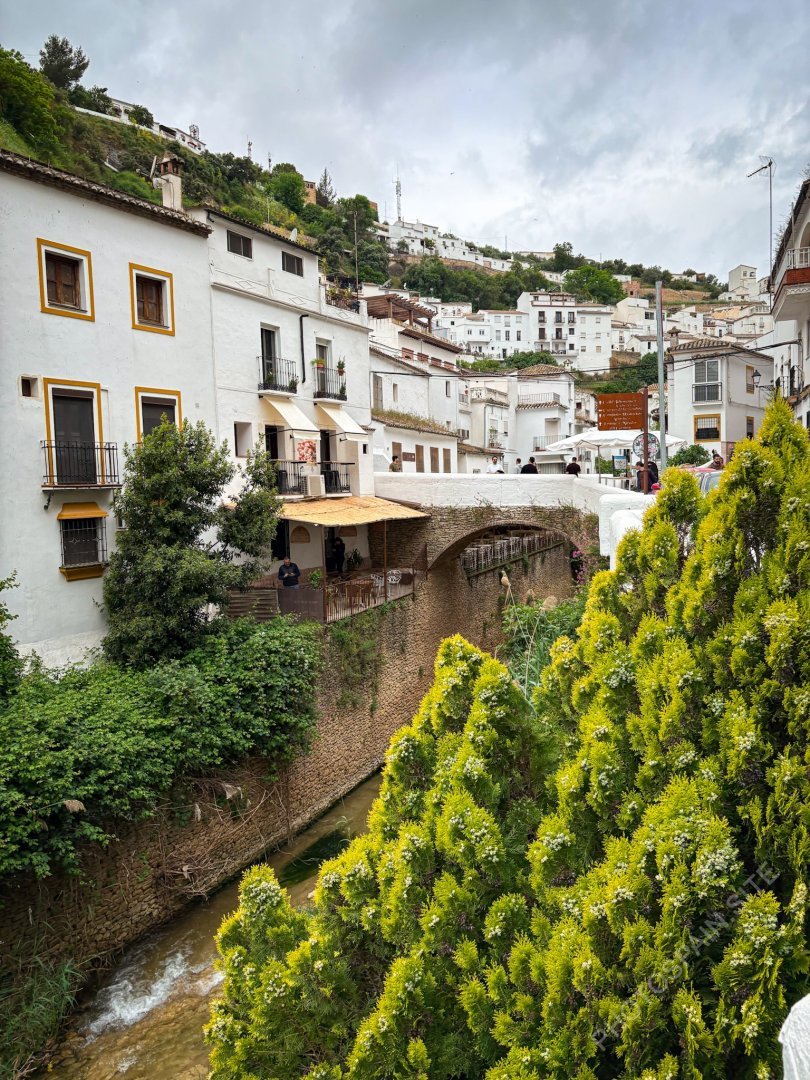
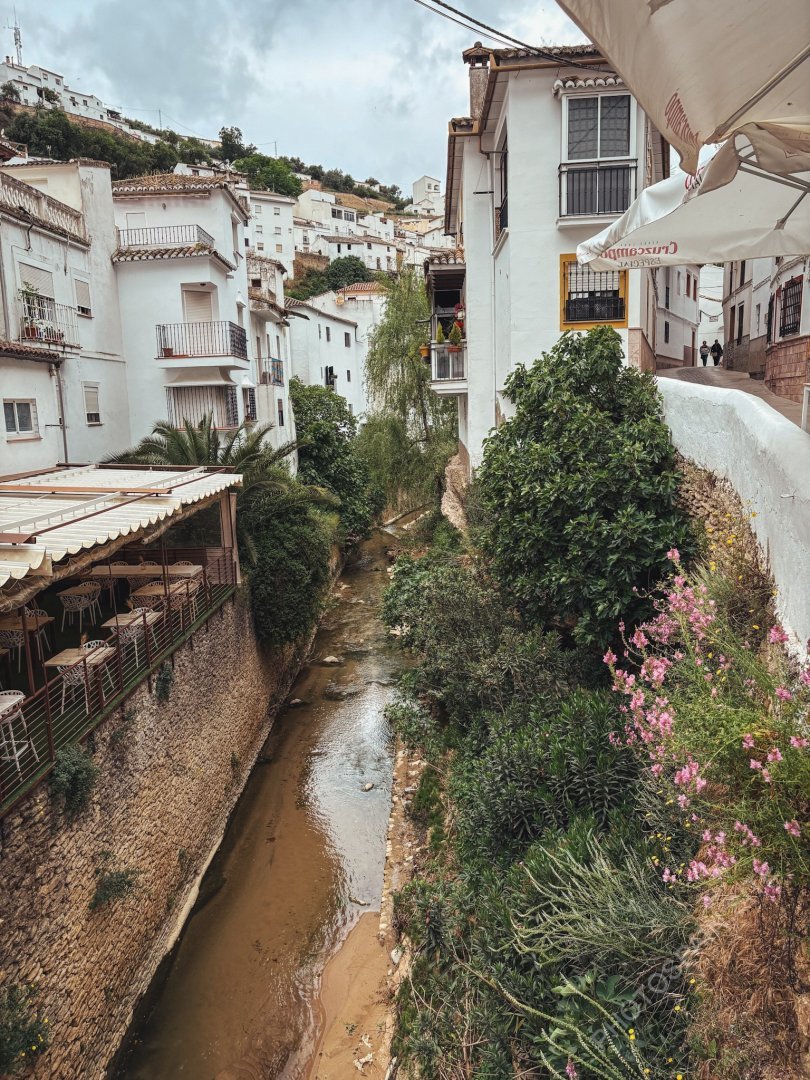
The town stretches along the bed of the Guadalporcún River, which has carved a deep canyon here over thousands of years. It is the terrain, rather than a carefully planned urban layout, that has shaped Setenil as we see it today: white houses, narrow streets, stairways, cliffs and unexpected changes in elevation.
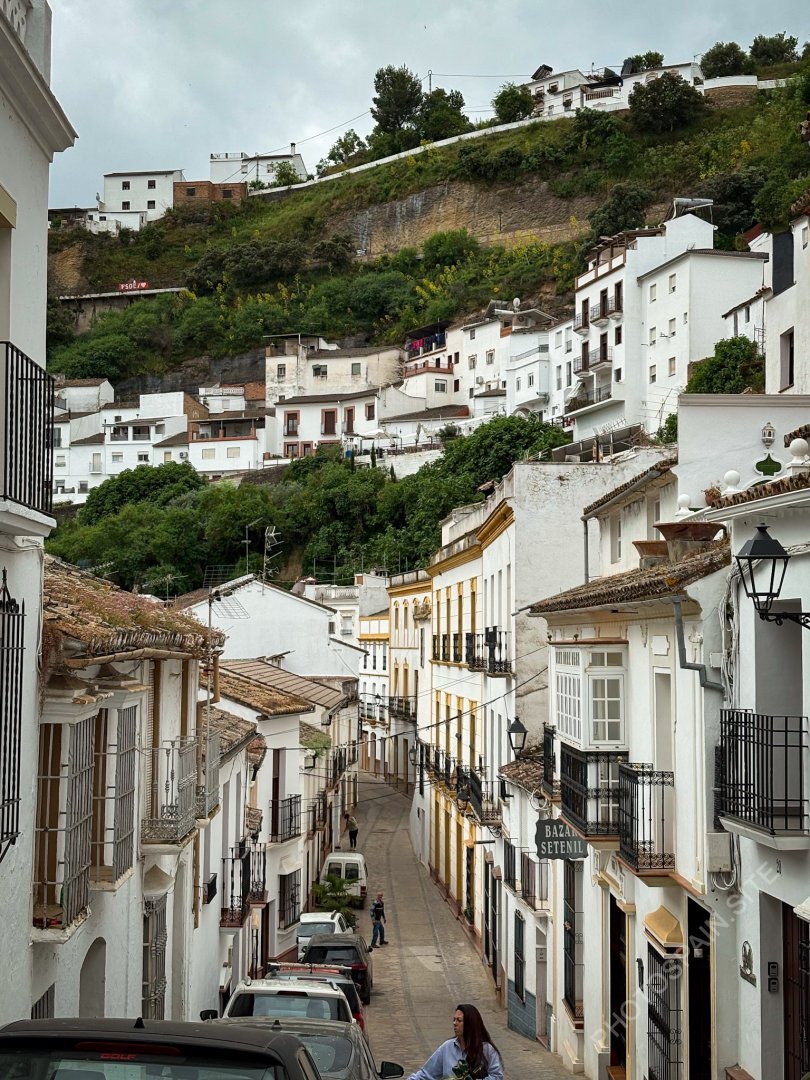
Setenil is part of the famous Pueblos Blancos — the White Villages of Andalusia, but it has a character all of its own. Most of the region’s white villages are known for their whitewashed facades and hillside locations. Here, however, the rock itself is the main attraction.
Calle Cuevas del Sol
A good place to start exploring is Calle Cuevas del Sol, one of Setenil’s best-known streets.
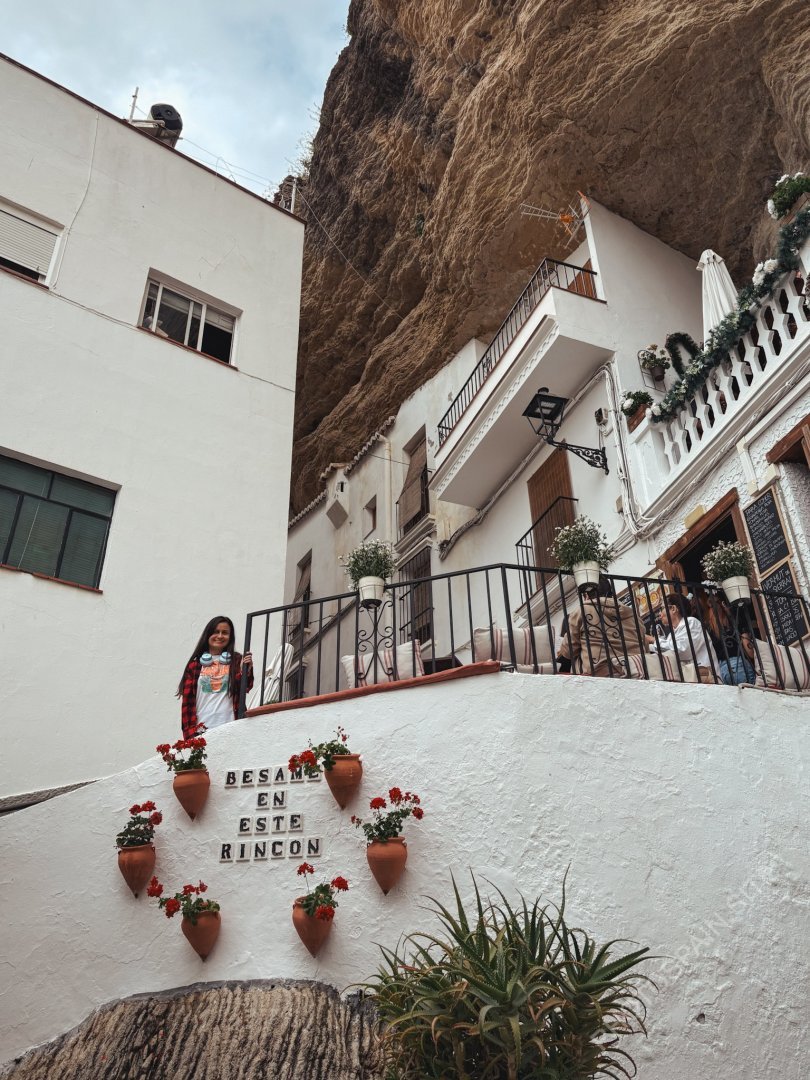
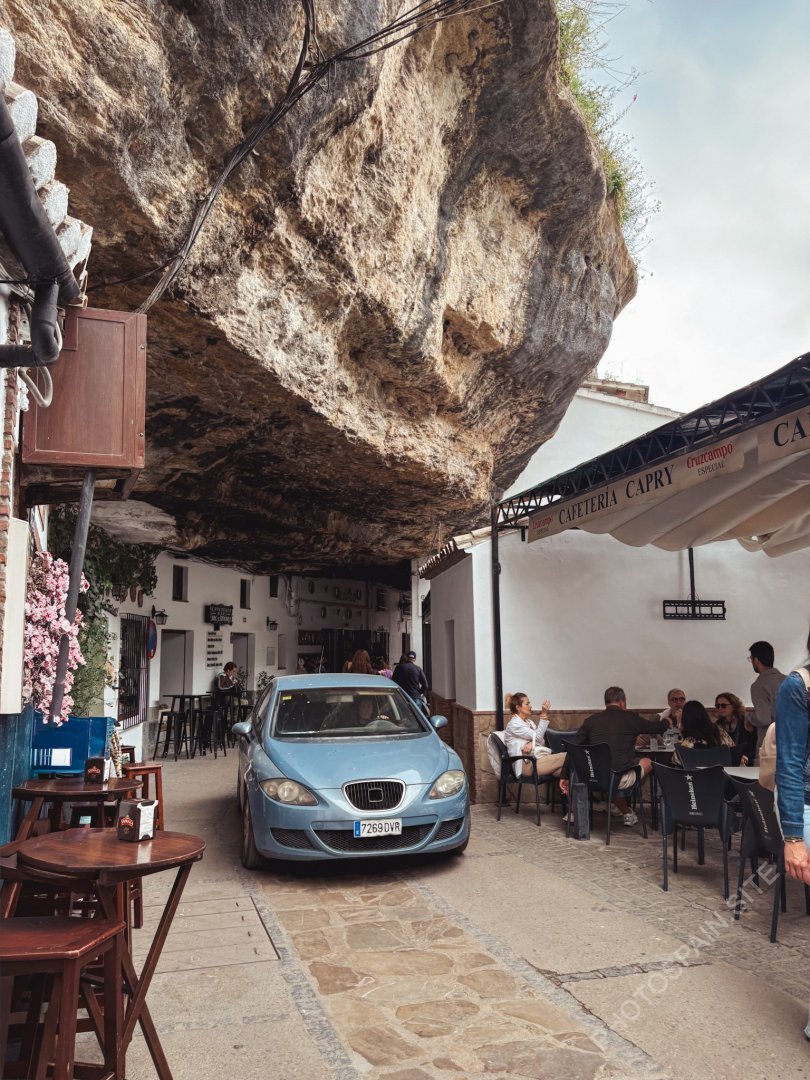
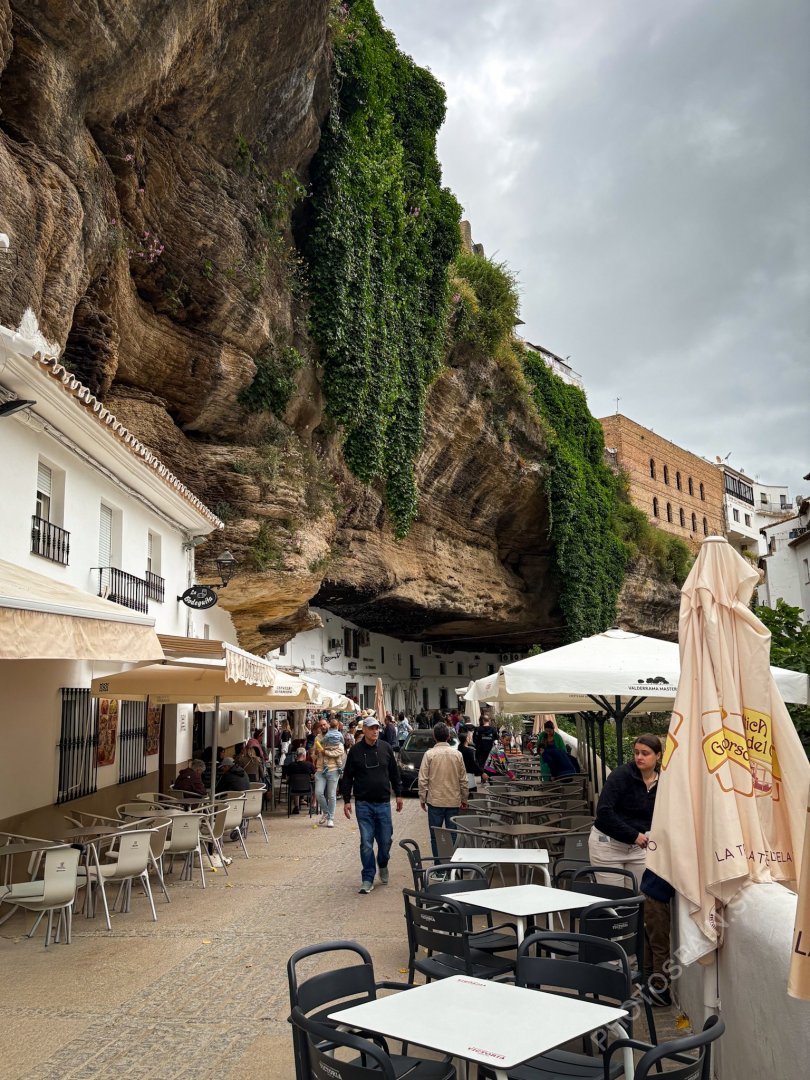
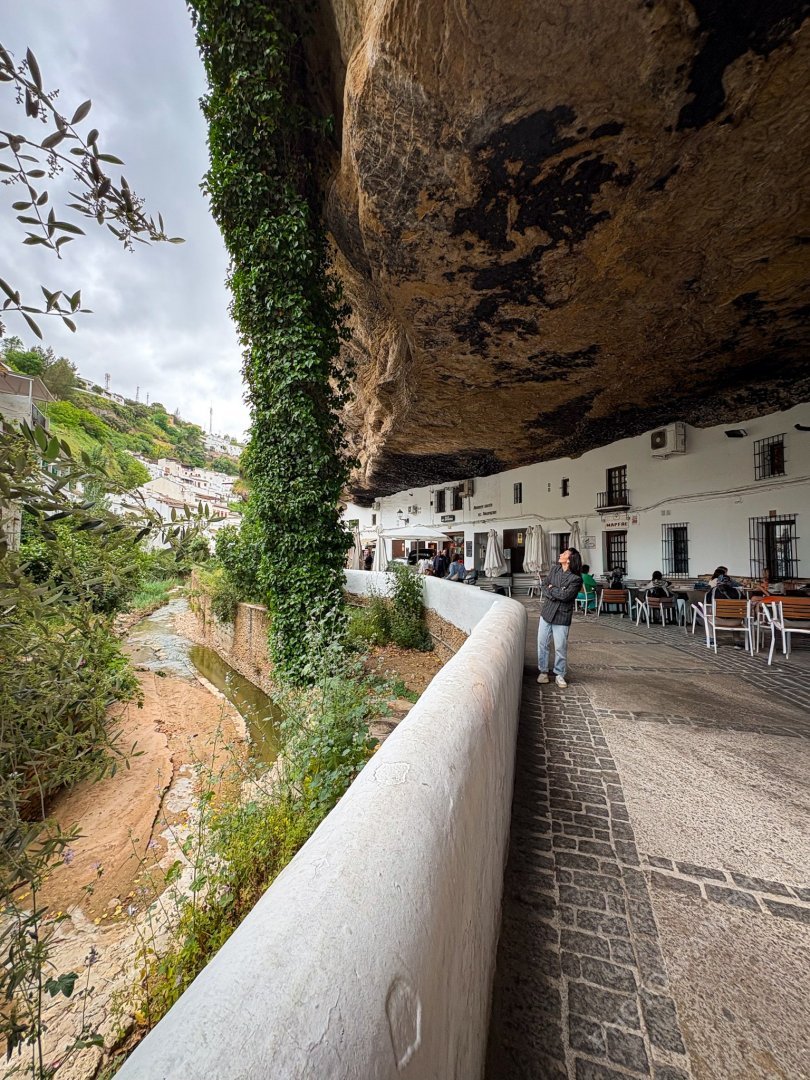
Its name means “Caves of the Sun”. The street faces south, so it gets considerably more sunlight than the opposite side of town. White houses line both sides, while huge natural rock formations hang above them.
What makes the local architecture so unusual is that the houses were not carved deep into the mountain. Instead, natural spaces beneath the rocks were used as ready-made shelter, with walls closing off the open sides and turning the protected space beneath the rock into living areas.
The result is a type of architecture where the boundary between nature and buildings almost disappears.
Today, Cuevas del Sol is Setenil’s liveliest and most tourist-oriented street. Cafés, bars and restaurants line the road, with tables sitting right at the foot of the rock.
Cuevas de la Sombra: a street beneath a stone ceiling
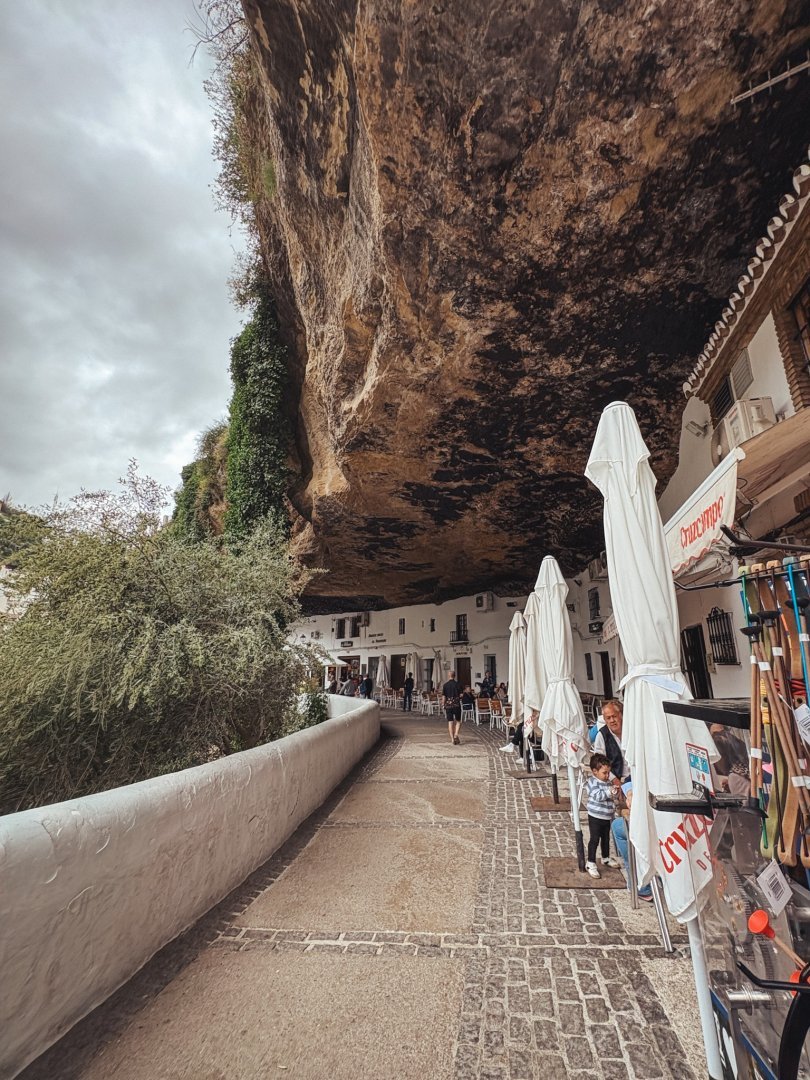
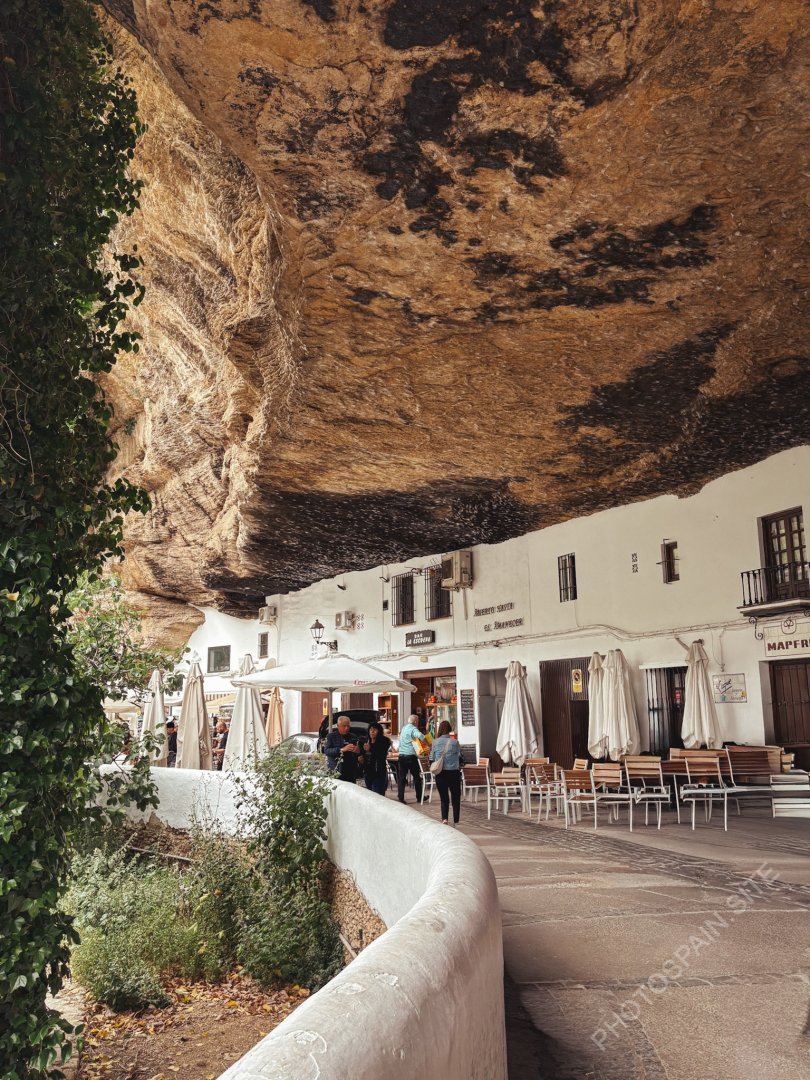
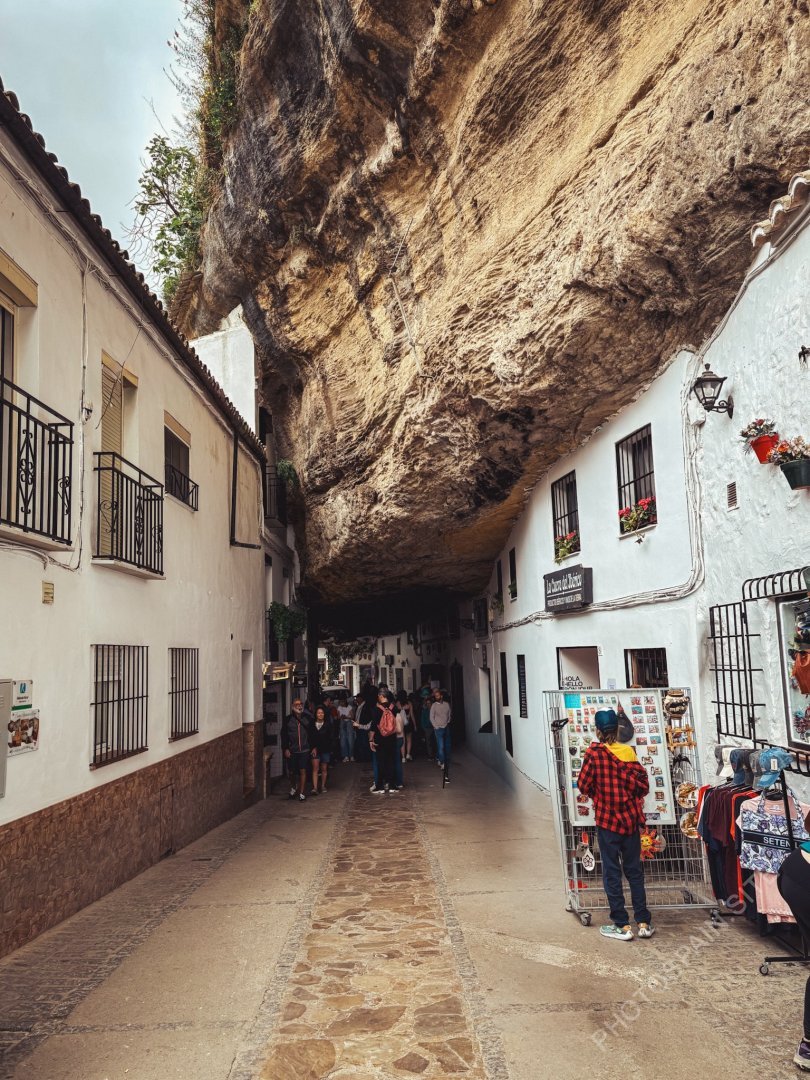
On the other side of the river lies Calle Cuevas de la Sombra, the “Caves of the Shadow”.
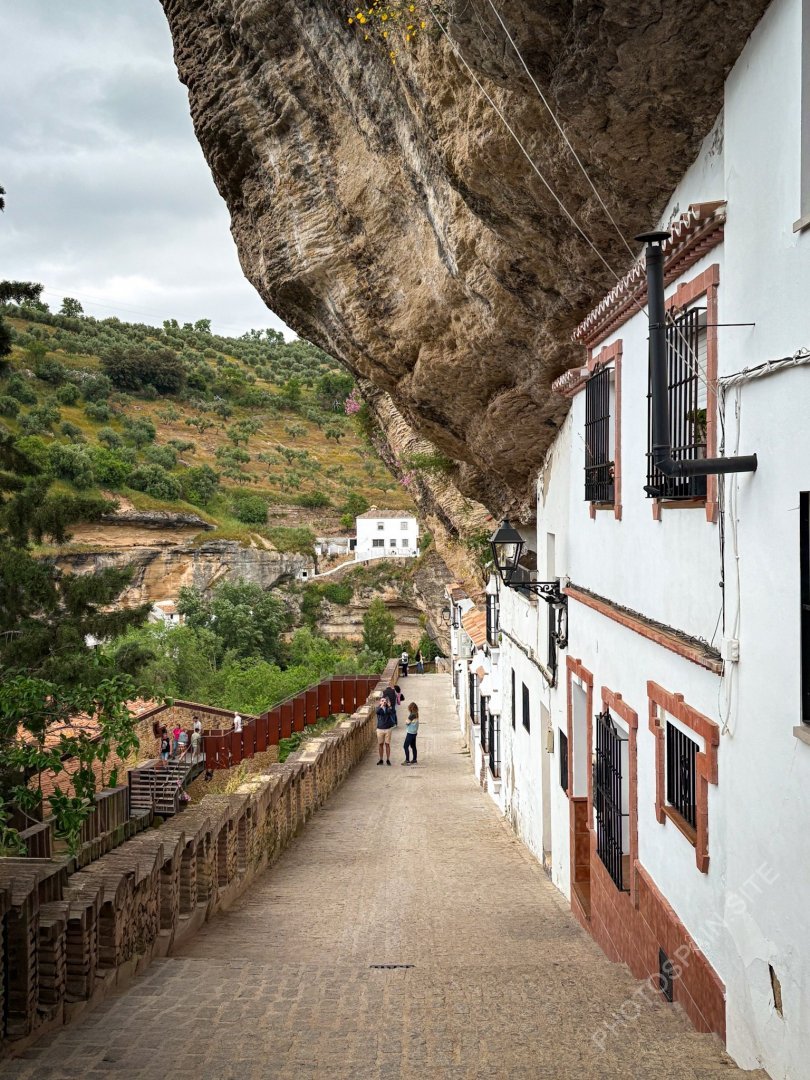
While Cuevas del Sol is filled with sunlight, the atmosphere here is completely different. A massive limestone cliff hangs over the street, almost blocking out the sky.
This is where you really get a sense of how unusual Setenil is. It feels as though the street was built inside a huge cave and the houses were added around it afterwards.
It is worth seeing both streets together: they are close to each other, yet create completely different impressions.
Calle Herrería
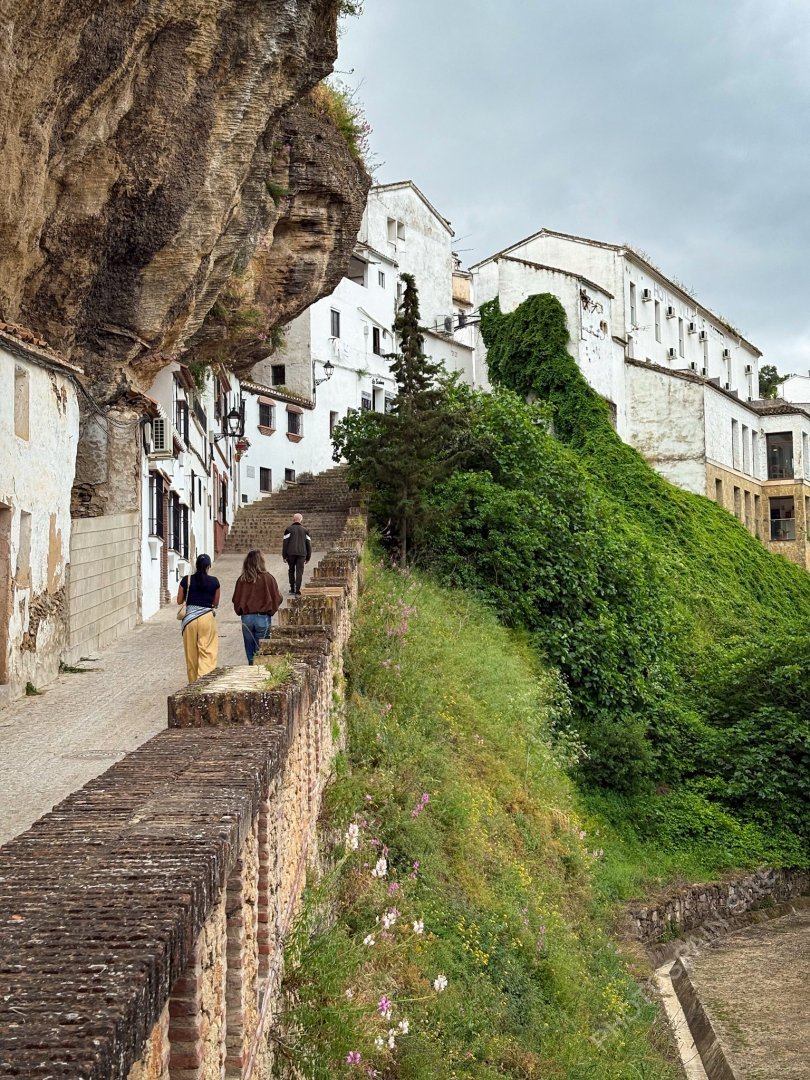
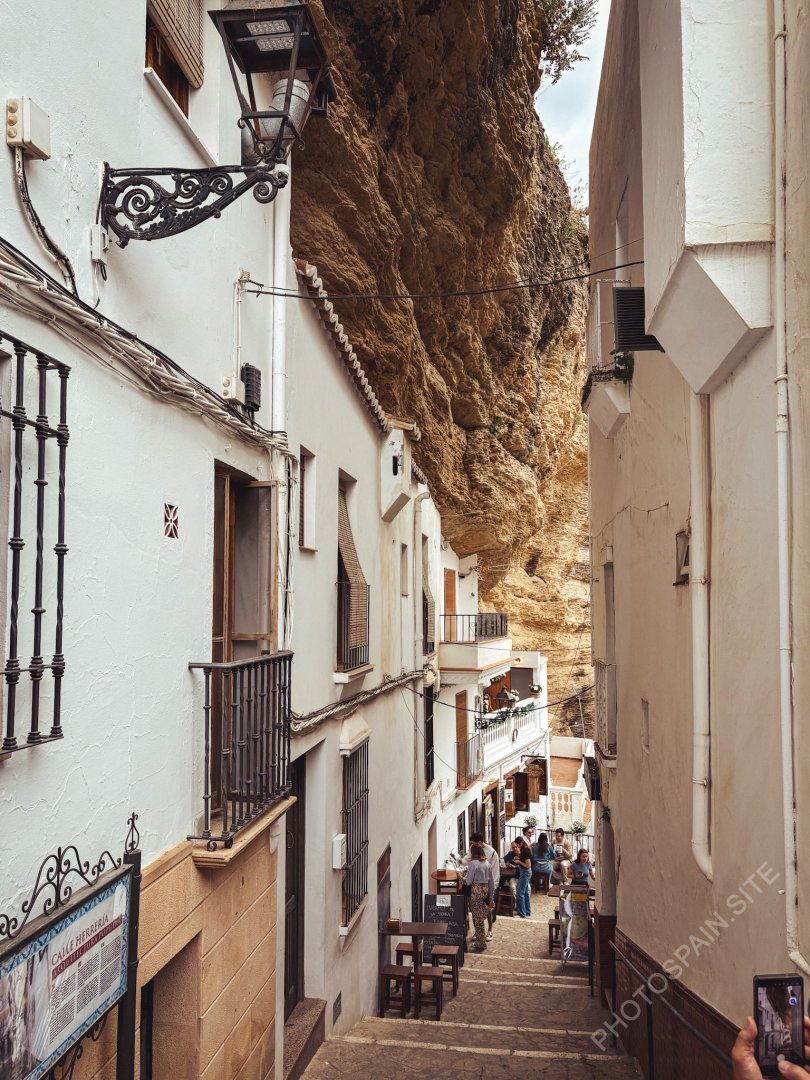
If you want to see more than the most famous spots, leave the main tourist routes behind and climb Calle Herrería.
It is one of the town’s most atmospheric streets: a narrow staircase winds between white houses and the rock, gradually climbing from the lower part of Setenil towards the historic centre.
Here, it feels less like an ordinary urban street and more like an old Andalusian settlement that has literally adapted to the landscape.
These small alleyways often turn out to be more interesting than the main attractions: around the next corner, you may find a completely unexpected view.
The castle and the upper part of town
To see Setenil from above, head up to La Villa, an area built on the site of the medieval settlement.
This was once an Almohad town protected by a fortress. Today, the remains include the keep, sections of the old walls and an Arab water cistern. The historic centre is also home to the Church of Nuestra Señora de la Encarnación and several small chapels.
The Torre del Homenaje, or keep, is particularly interesting. From here, you can look down over the town and see something that is easy to miss from the lower streets: Setenil is literally squeezed between the rocks.
For photography, this is one of the best places to appreciate the geography of the town.
Where does the name Setenil de las Bodegas come from?
The first part of the name, Setenil, is linked to the town’s medieval history. It is believed to come from the Latin expression septem nihil, meaning “seven nothing”, referring to seven unsuccessful attempts to capture the fortress.
The second part, de las Bodegas, appeared later and is associated with the development of agriculture, particularly grape growing and wine production.
Despite its name, Setenil is known for much more than wine today. Local food is another good reason to stay a little longer.
What to try
After walking among the rocks, stopping for lunch at one of the local restaurants is the obvious choice.
Setenil is known for traditional Andalusian cuisine and locally produced food. Menus often feature meat dishes, cured meats, cheeses, olive oil, vegetables and other traditional regional specialities.
It is also worth trying the local aceitunas, or olives, as well as pork dishes, which are an important part of the culinary tradition in the mountainous areas of Andalusia.
But there is another part to the experience: eating in Setenil is not just about the food. Sitting at a table directly beneath a huge rock is part of what makes the town special.
Setenil is more than its two famous streets
One of the biggest mistakes is to arrive, photograph Cuevas del Sol and Cuevas de la Sombra, and leave straight away.
The most interesting part begins when you wander a little further.
The town has streets such as Calle Jabonería, Cabrerizas and Calcetas, along with small stairways and alleyways connecting the lower part of town with the historic centre. There are also viewpoints such as Mirador del Lizón and Mirador de la Villa, offering views over the houses, rocks and riverbed.
In the Cuevas de San Román area, you can also see another example of traditional buildings integrated beneath the rocks.
That is why Setenil is best experienced not as a single attraction, but as a small urban maze worth exploring on foot.
How much time do you need for Setenil de las Bodegas?
Two to three hours are enough to see the main sights.
In that time, you can walk along Cuevas del Sol and Cuevas de la Sombra, climb to the upper part of town, see the fortress, explore Calle Herrería and some of the surrounding streets, and find a couple of viewpoints.
But if you want to do more than simply tick Setenil off your list, it is worth allowing half a day to wander, have lunch and take photographs at a relaxed pace.
That is when Setenil really comes into its own.
Is it worth visiting?
Yes, if you want to see something genuinely unusual in Andalusia.
Setenil is not defined by a particular castle, church or square. Its main attraction is the town itself and the way it fits into the landscape.
Here, the rock becomes a roof, the river forms the backbone of the town, and the streets literally follow the shape of the canyon.
And perhaps that is why Setenil leaves a stronger impression than many other beautiful white villages of Andalusia. These are not simply white houses set against the mountains. It is a place where nature and architecture are so closely intertwined that it becomes difficult to tell where one ends and the other begins.
Setenil de las Bodegas is one of those places where you do not need to look for a particular building to find the main attraction. Just step outside and look up.
Setenil de las Bodegas photos
Information
How to get there: By any car
Date of visit: May 2026
GPS coordinates: 36.862092, -5.181752


