
A small town built not on a cliff, but right inside it.
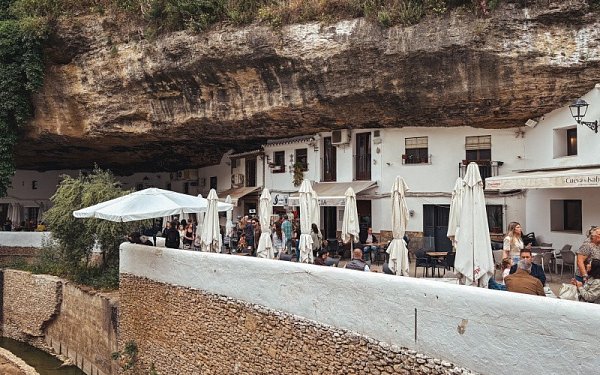
A small town built not on a cliff, but right inside it.

The blue Smurfs village

A legendary bridge over a 100-meter gorge with breathtaking views

Mystical atmosphere, holy relics and breathtaking views

A palace and fortress complex in Granada that amazes with its Moorish architecture, exquisite gardens and the atmosphere of an oriental fairy tale

Snowy peaks, kilometers of modern slopes, quality service and Mediterranean flavor

An interactive museum with many exhibitions, workshops, biodome, planetarium, butterfly garden and many interesting displays

A historic town on the Costa Tropical where you can relax all year round

A place of confluence of eras, Islamic and Christian cultures

An ancient city of Arab markets, Roman bridges, colorful mosaics and a million living flowers

An unusual monument to Christopher Columbus, made in the form of a castle-ship

The southernmost point of continental Europe. The place where the sea becomes the ocean

A major port city on the Costa del Sol in southern Spain

A city at the foot of the Sierra Nevada mountains. Historical monuments from different eras, fiery flamenco and Andalusian cuisine

An ancient fortress perched on a rocky cliff above the city

The capital of Andalusia. The charm of antiquity, the beauty of modernity and fiery holidays
Located in the south of Spain, Andalusia is a region that captivates with its rich culture, historical legacy, and stunning natural beauty. Where the Mediterranean Sea meets the Atlantic Ocean, this land is a true gem of Spain, attracting travelers with its picturesque landscapes, ancient cities, and unique atmosphere.
The history of Andalusia is a story of civilizations converging. It has been home to Phoenicians, Romans, and Visigoths, but perhaps most profoundly shaped by the Arabs, who ruled the region for nearly 800 years. Moorish influence is especially visible in Andalusia’s architecture, music, and cuisine. World-renowned landmarks like the Alhambra in Granada, the Mezquita in Córdoba, and the Alcázar in Seville stand as powerful testaments to this majestic cultural legacy.
Andalusia is also considered the birthplace of flamenco – a passionate and deeply expressive art form that reflects the soul of the region. Flamenco evenings in traditional taverns and dedicated “tablaos” offer an immersive cultural experience and a chance to feel the emotional intensity of this unique genre.
Andalusian cuisine is a fusion of traditions and flavors that mirror the region’s rich history. From hearty tapas to refined delicacies, there’s something to satisfy every palate. Among its most iconic dishes are gazpacho – a refreshing cold tomato and vegetable soup perfect for hot summer days – and salmorejo, a thick tomato and bread-based soup often served with hard-boiled eggs and jamón.
The region is also famed for its olive oil, a cornerstone of local cooking. Producing around 40% of the world’s olive oil, Andalusia is globally recognized for its exceptional quality.
Seafood plays a major role in the Andalusian diet, particularly along the coast. In cities like Cádiz and Huelva, visitors can enjoy fresh shrimp, squid, and tuna. And no visit would be complete without sampling the region’s wines – especially the renowned sherry (Jerez) from Jerez de la Frontera, considered among the finest in Spain.
Andalusia’s nature is as diverse as it is breathtaking. The region offers stunning scenery – from the snowcapped peaks of the Sierra Nevada and the arid landscapes of the Tabernas Desert to the endless beaches of the Costa del Sol and the lush Guadalquivir Valley.
The Sierra Nevada, the highest mountain range on the Iberian Peninsula, is a popular destination for winter sports. Visitors can ski its slopes or hike scenic trails with panoramic views of the surrounding landscapes.
Andalusia’s coastline boasts some of Spain’s best beaches. Along the Costa del Sol and Costa de la Luz, you'll find both lively resorts and secluded coves with crystal-clear waters — perfect for swimming, water sports, or simply soaking up the sun.
Andalusia is a region where each city has its own unique character and story to tell.
Seville, the capital of Andalusia, is a vibrant city rich in cultural heritage. It’s home to one of the largest Gothic cathedrals in the world, the iconic Giralda tower, and the magnificent Alcázar palace. Seville is also famous for its lively festivals, especially Holy Week (Semana Santa) and the April Fair (Feria de Abril), which draw thousands of visitors each year.
Granada invites travelers to step into its Moorish past with a visit to the Alhambra, one of Spain’s most impressive fortresses. The old Albaicín quarter, with its winding alleys and whitewashed houses, and the Sacromonte caves, where flamenco still thrives, give the city an unforgettable charm.
Córdoba is another city steeped in history. Its main attraction, the Mezquita – a former mosque turned cathedral – stands as one of Europe’s most remarkable examples of Islamic architecture. The narrow streets of the Jewish Quarter (Judería) and Córdoba’s traditional courtyards add to its enchanting atmosphere.
Andalusia is renowned for its festivals and celebrations, which reflect both its religious devotion and vibrant cultural traditions. Semana Santa (Holy Week) is one of the most important events of the year, celebrated with grand processions in cities like Seville and Málaga. These days are filled with pageantry, devotion, and powerful emotion.
The Feria de Abril in Seville is another major highlight, where locals and visitors come together to enjoy music, dancing, and traditional food. Every city in Andalusia hosts its own unique festivals, offering deeper insight into local customs and ways of life.
Andalusia is a region where past and present come together to form a unique tapestry of culture, history, and natural beauty. From magnificent architectural landmarks and charming villages to sun-drenched beaches and awe-inspiring mountains, Andalusia has everything that makes Spain so alluring. Whether you’re drawn to history, culture, cuisine, or nature, Andalusia promises unforgettable memories and the irresistible desire to return again and again.