
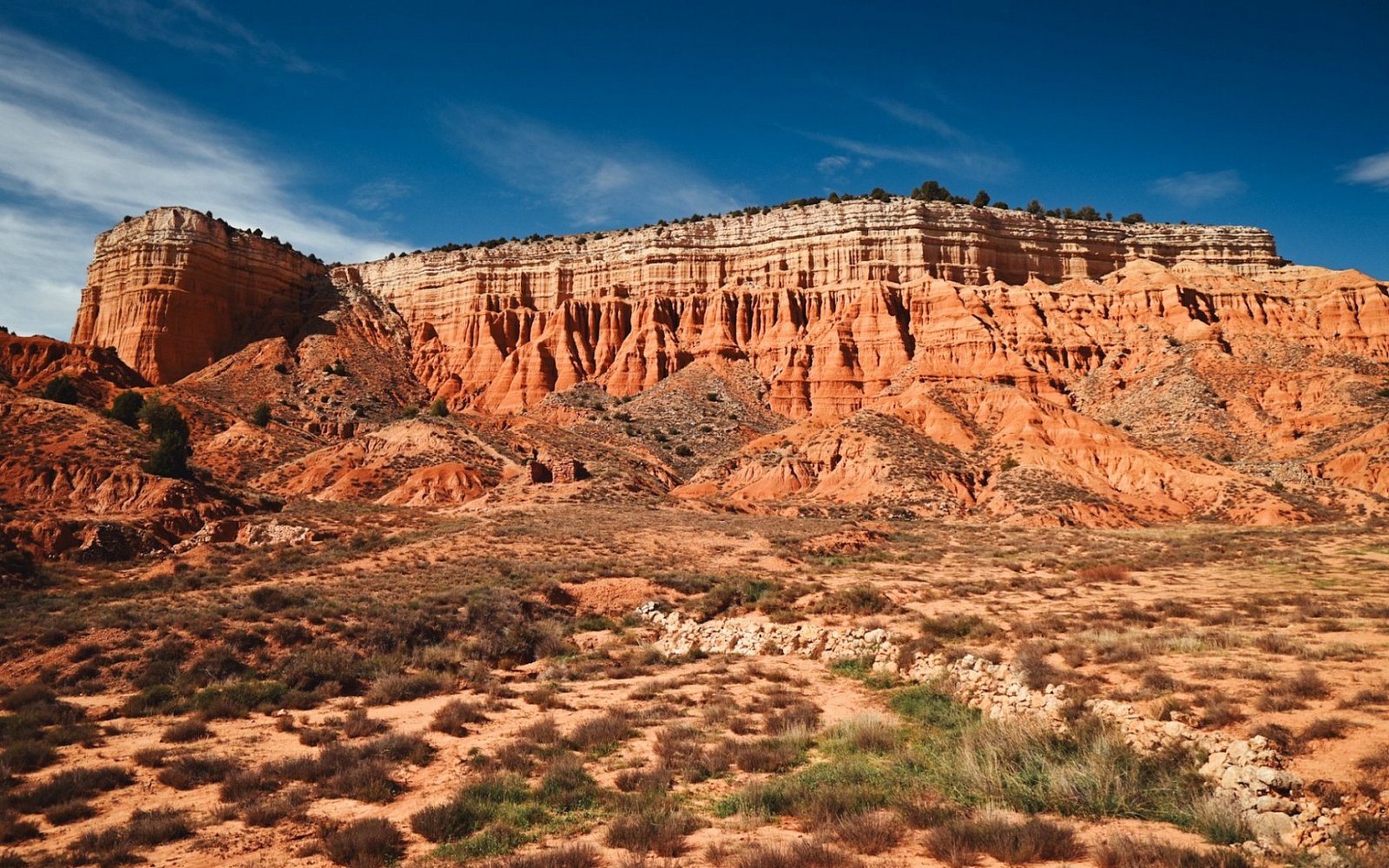
The Red Canyon of Teruel
Teruel’s Red Canyon — a Taste of the Wild West in Spain
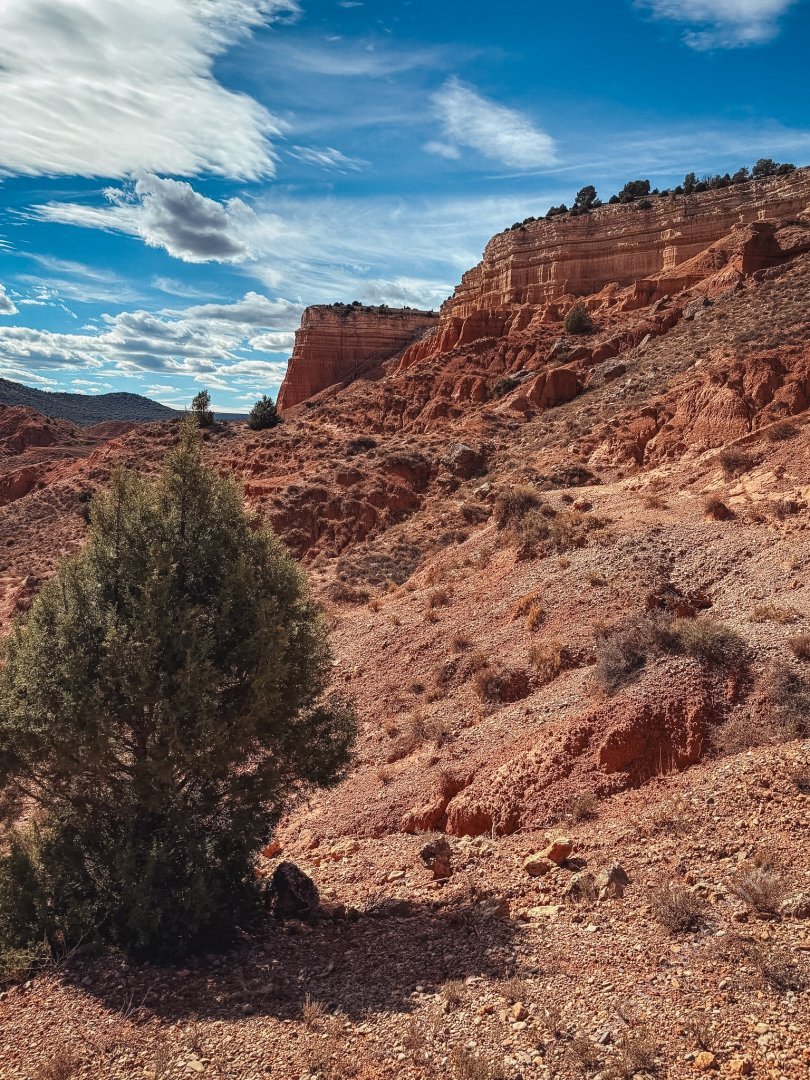
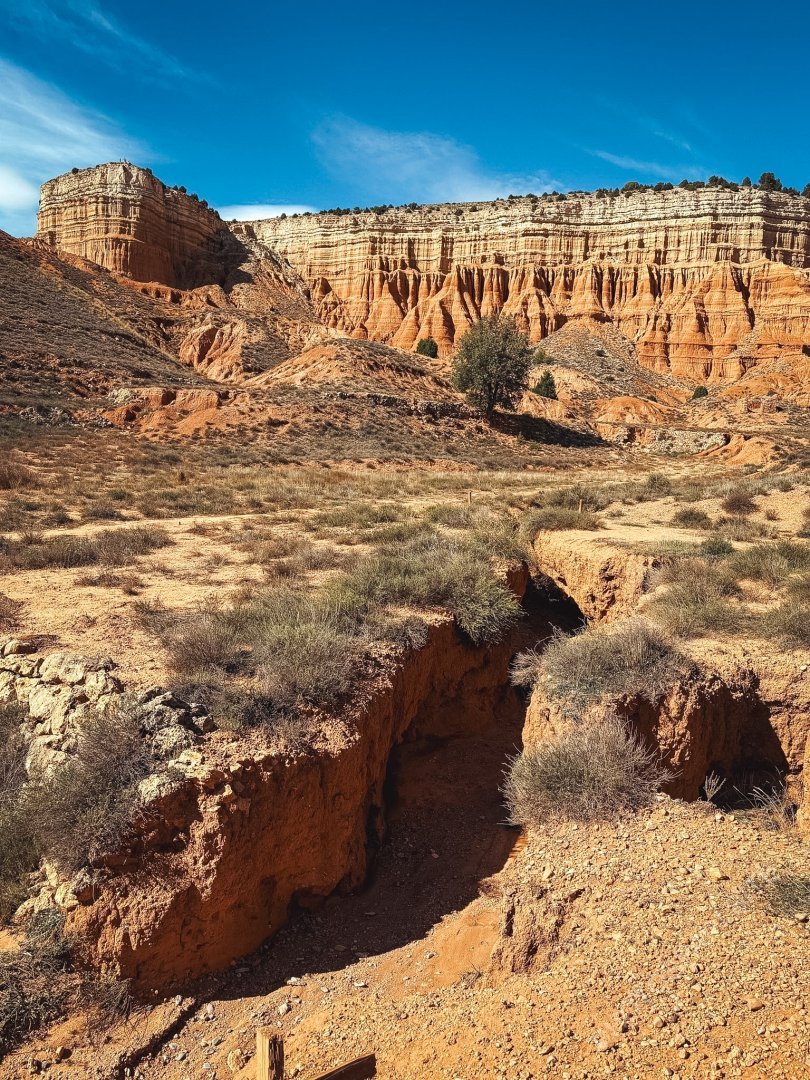
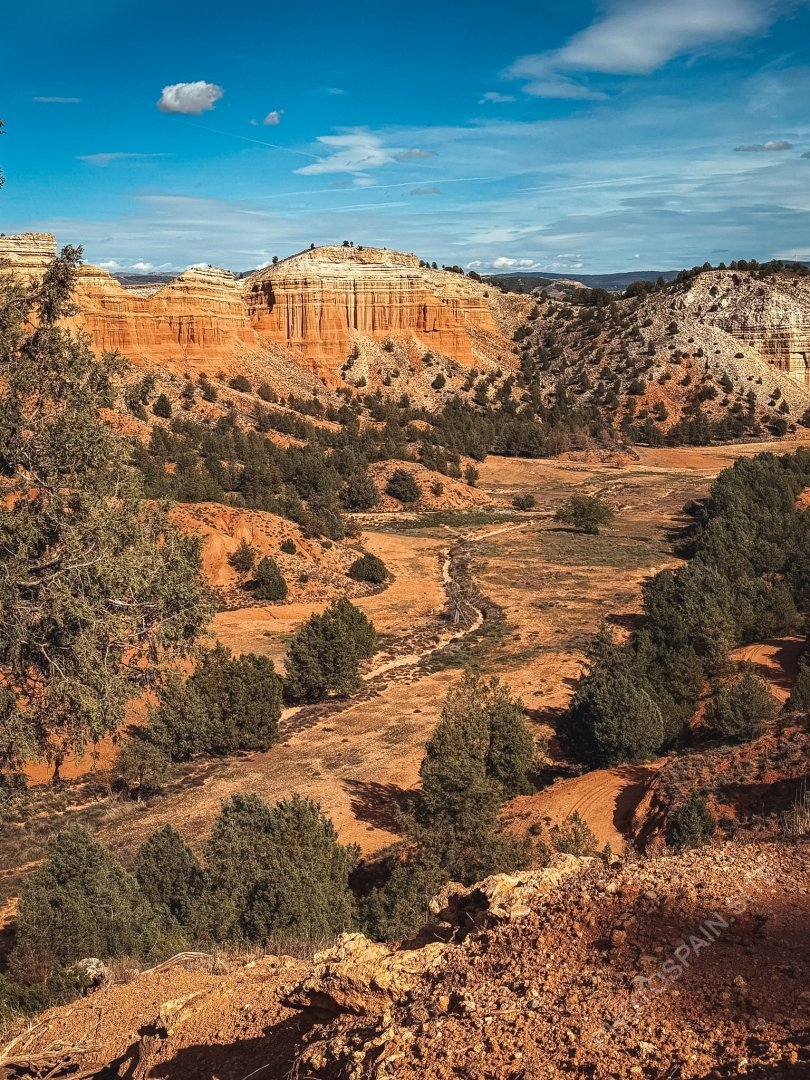
Red cliffs, winding ravines and sparse vegetation create a landscape that feels more like the American West than Spain. Yet just a few kilometres from the city of Teruel lies the Cañón Rojo, or Red Canyon, a striking natural area with formations that look straight out of a Western film.
The canyon is located in the Rambla de Barrachina area, where water and wind have gradually shaped the soft rock into unusual slopes and cliffs. Visitors come here to walk among the reddish formations, enjoy panoramic views and photograph this remarkable landscape.
One of its main attractions is its proximity to Teruel. In just a few minutes by car, you can leave the city’s architecture behind and enter a dry, almost otherworldly environment.
What Is the Red Canyon Like?
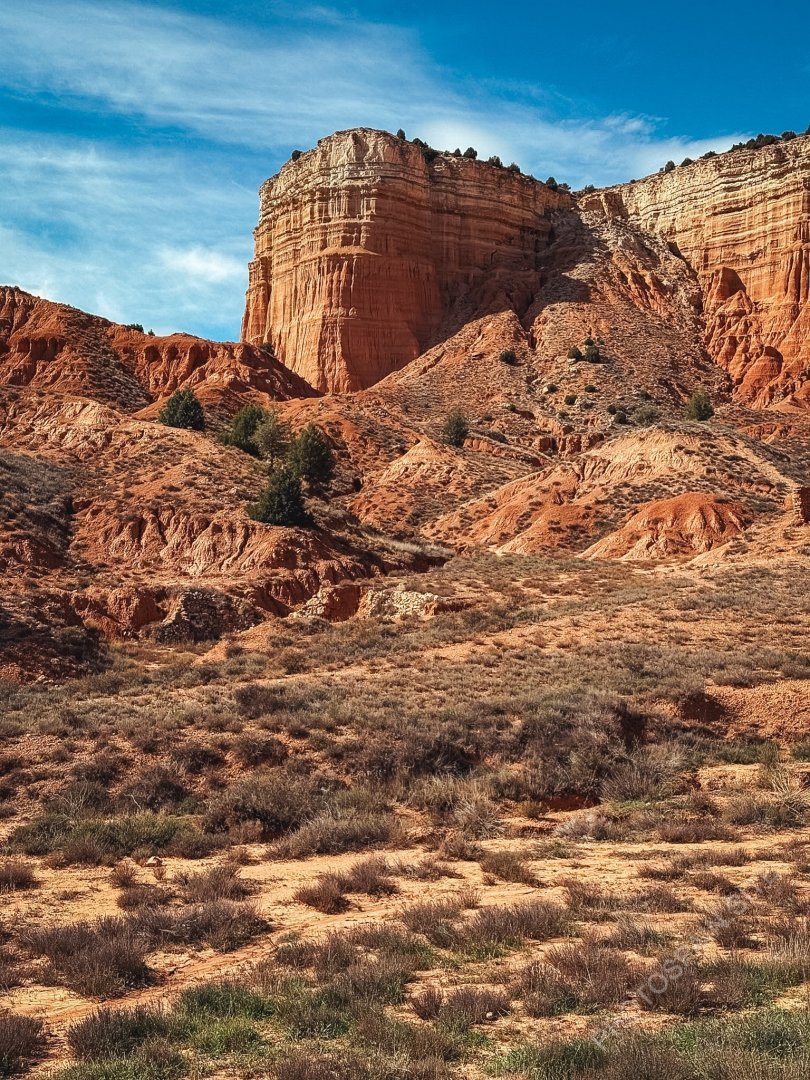
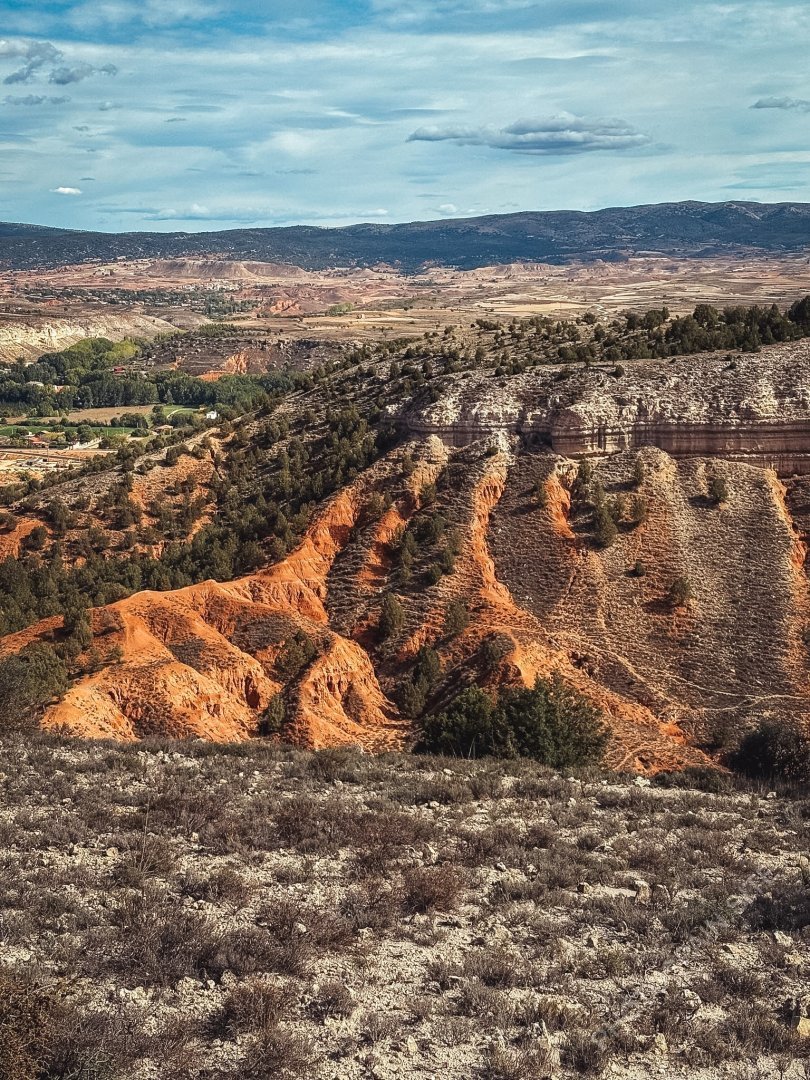
The Red Canyon is part of the natural landscape of Rambla de Barrachina, known for its clay slopes, ravines and rock walls in shades of red, orange and ochre. Rather than a traditional mountain canyon with a permanent river, it is an arid area shaped by water erosion acting on loose, soft rock.
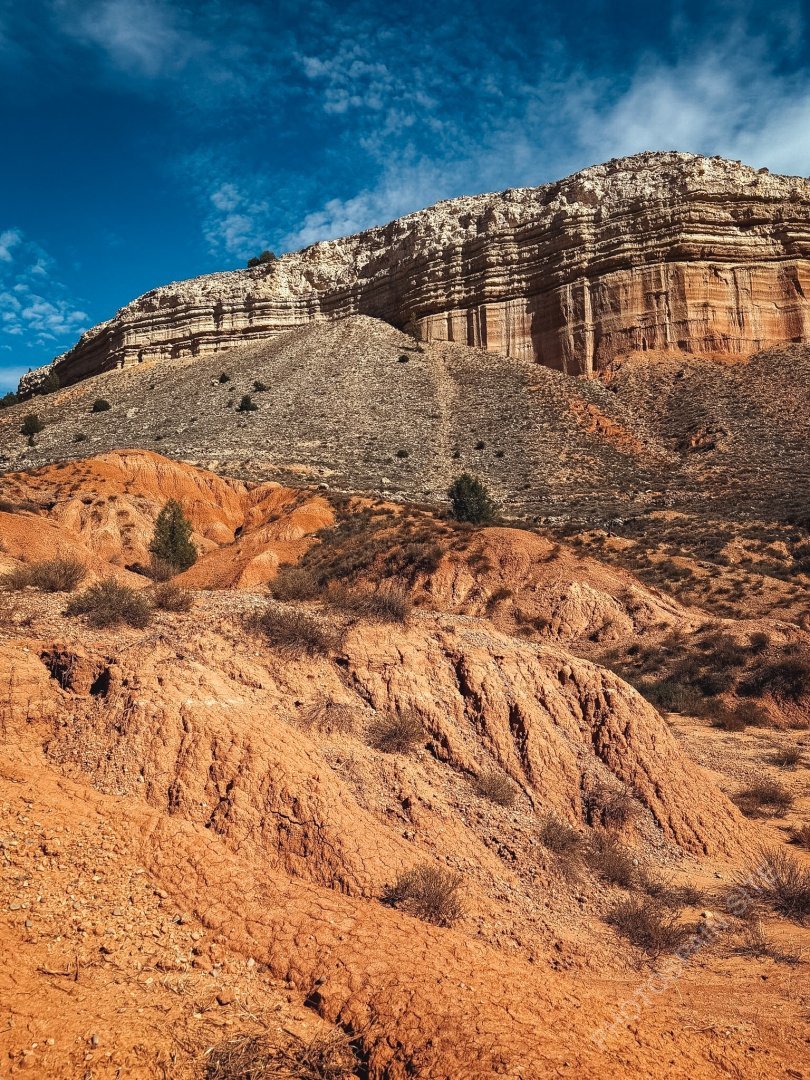
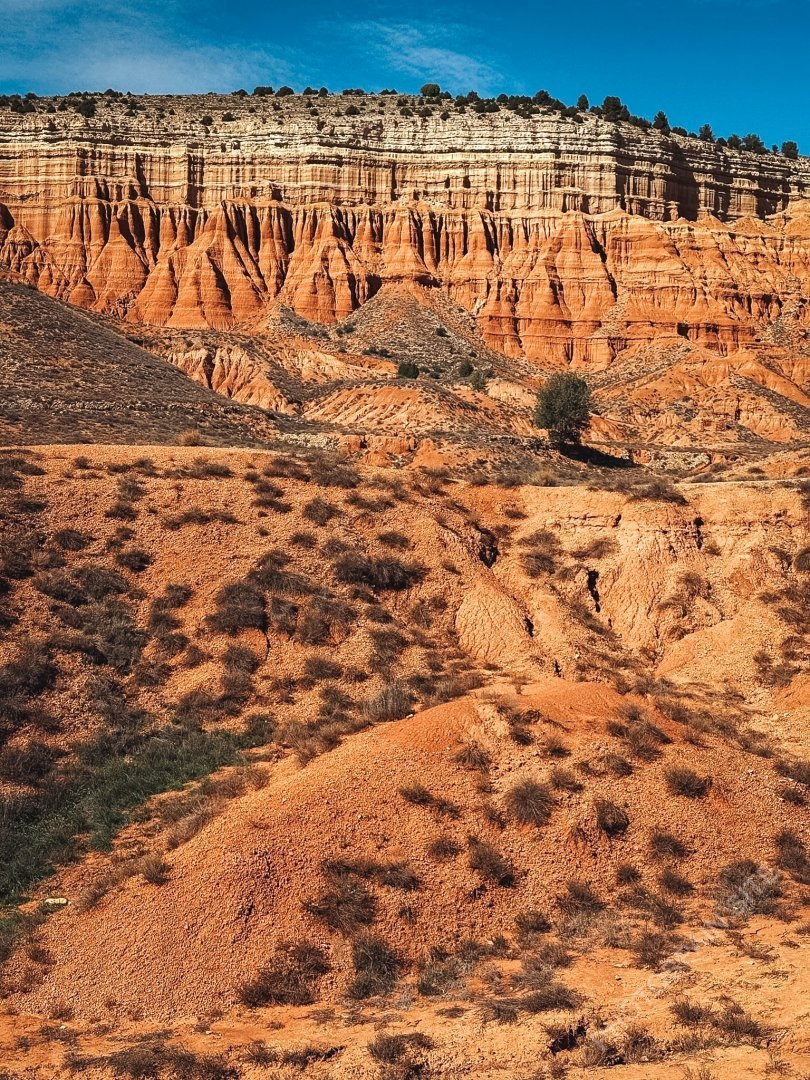
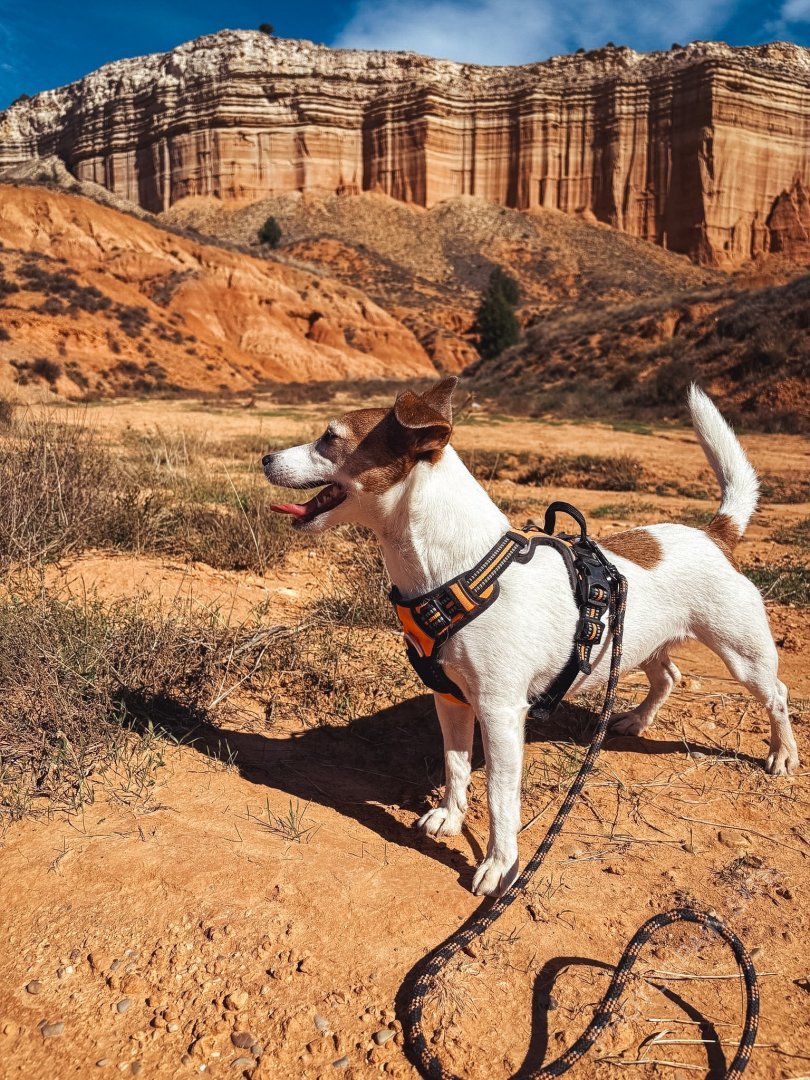
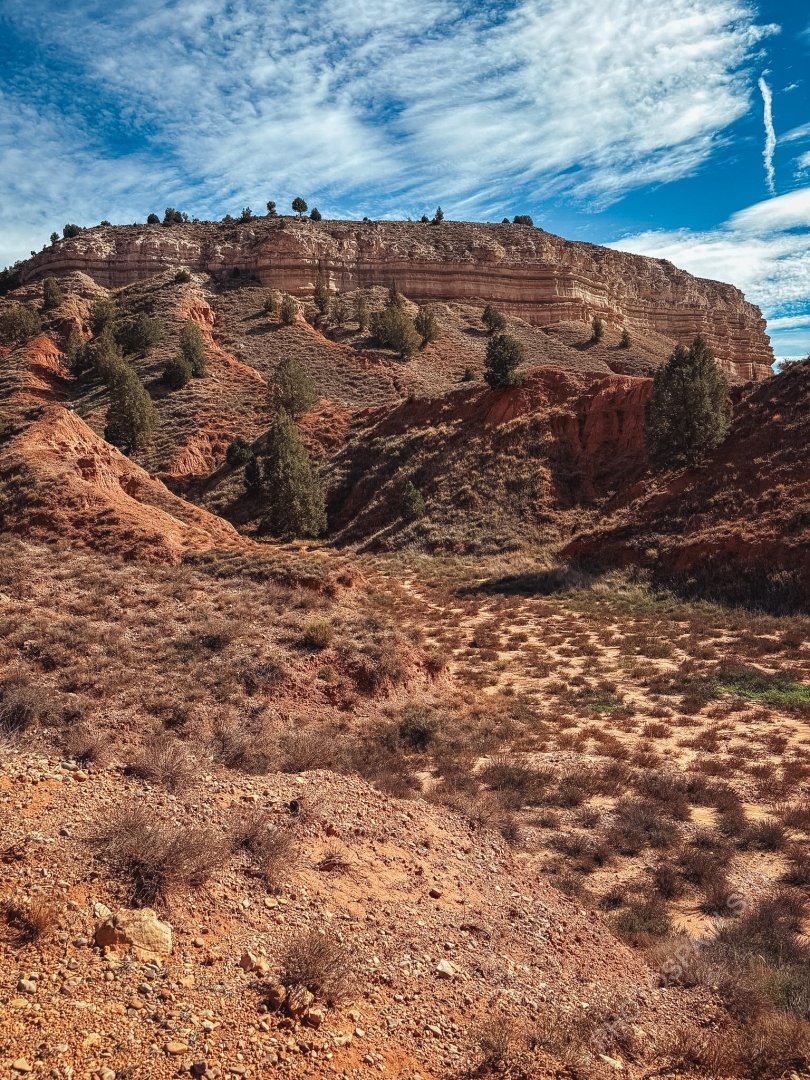
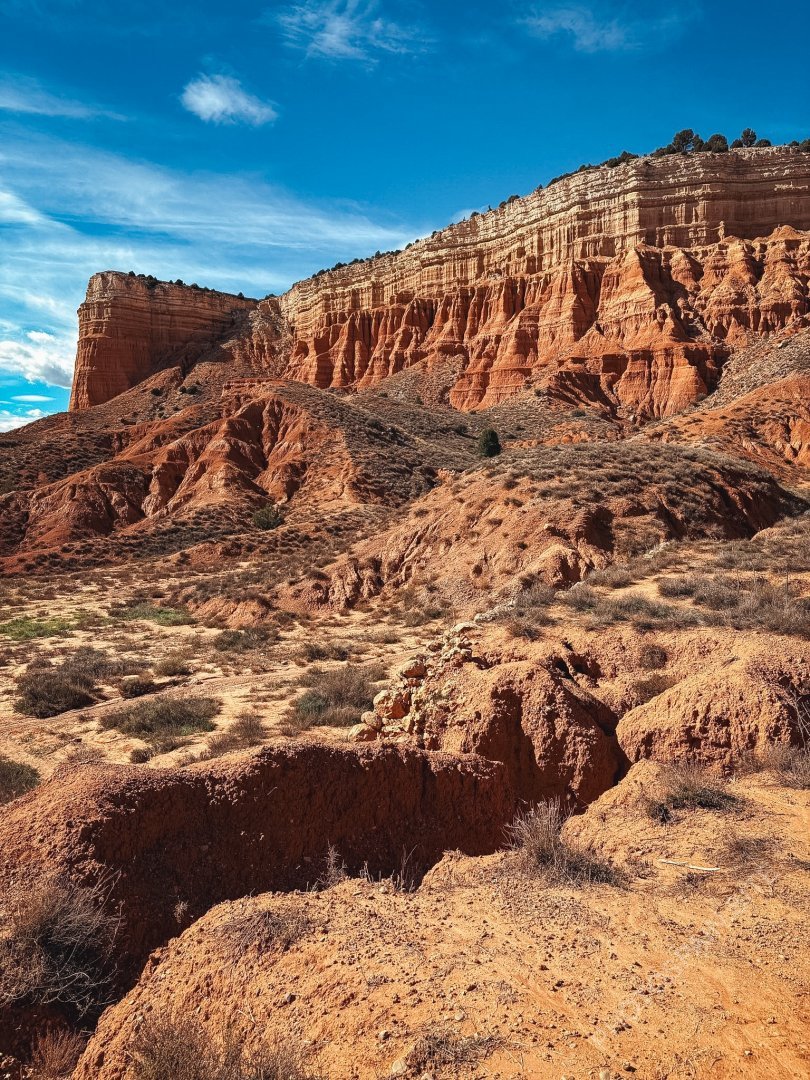
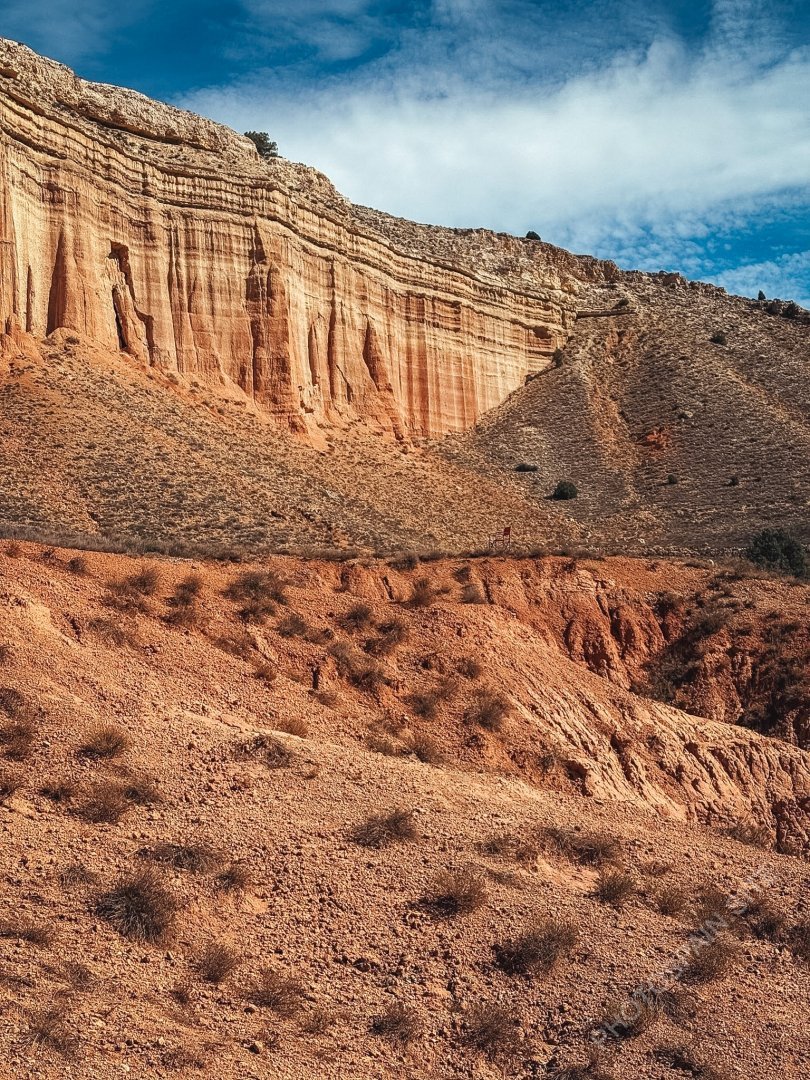
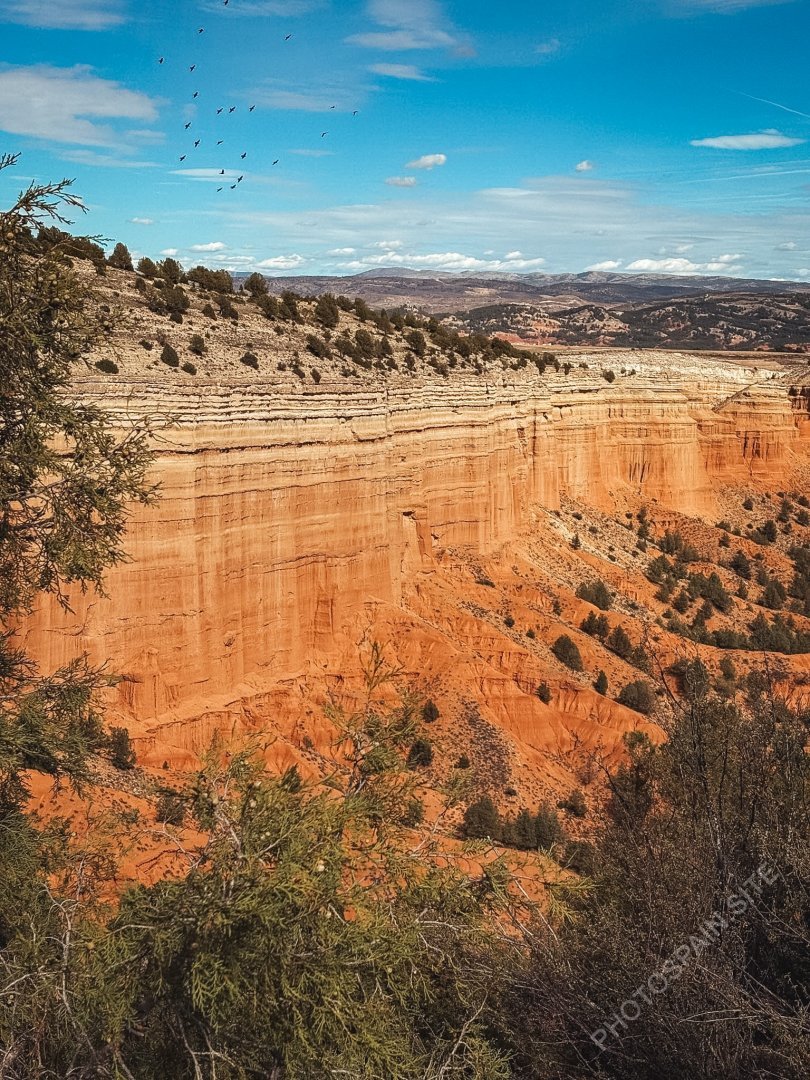
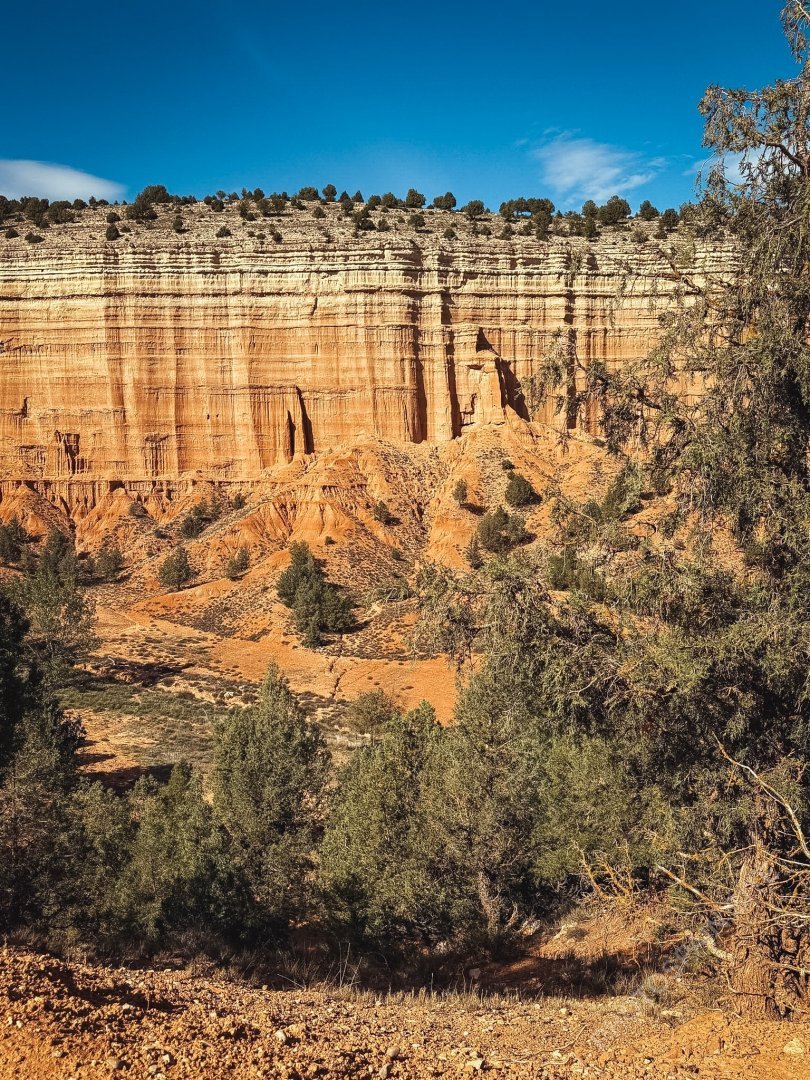
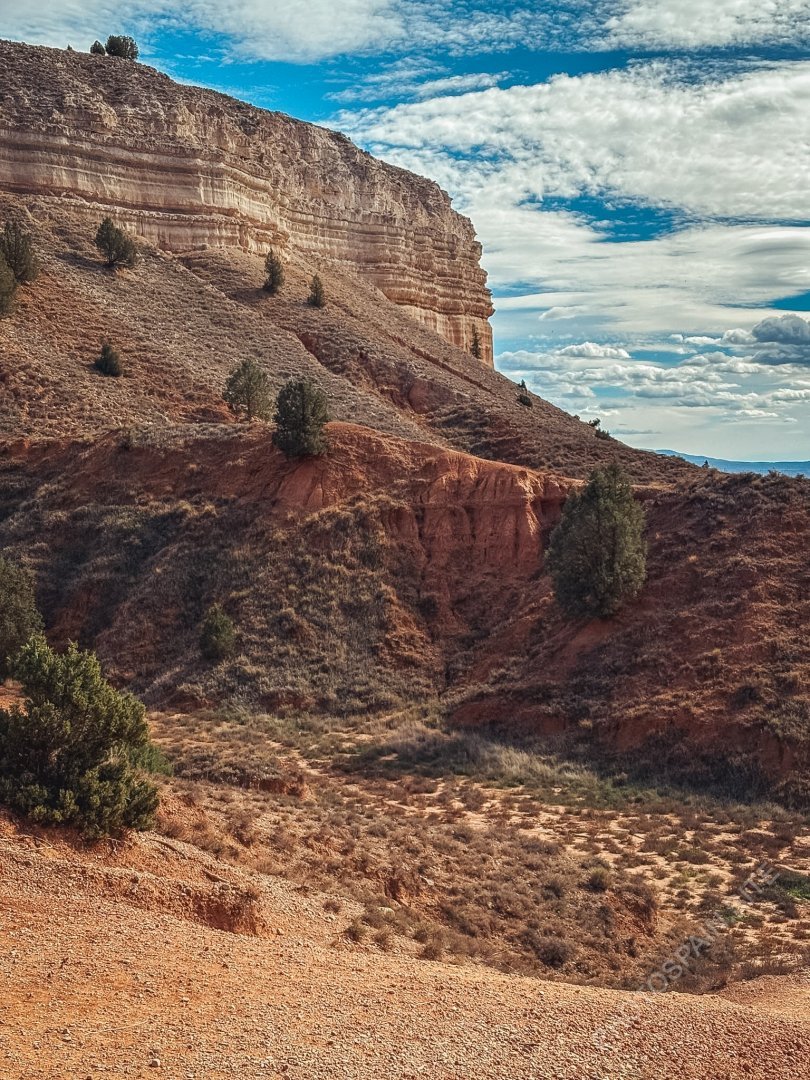
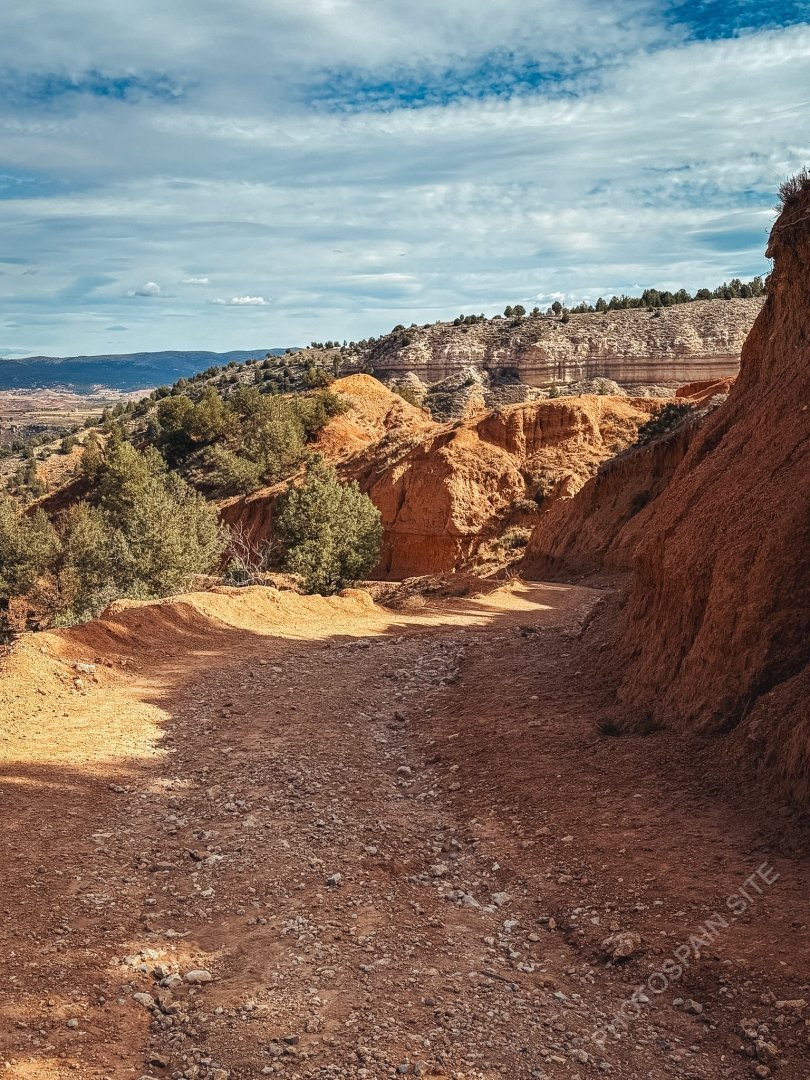
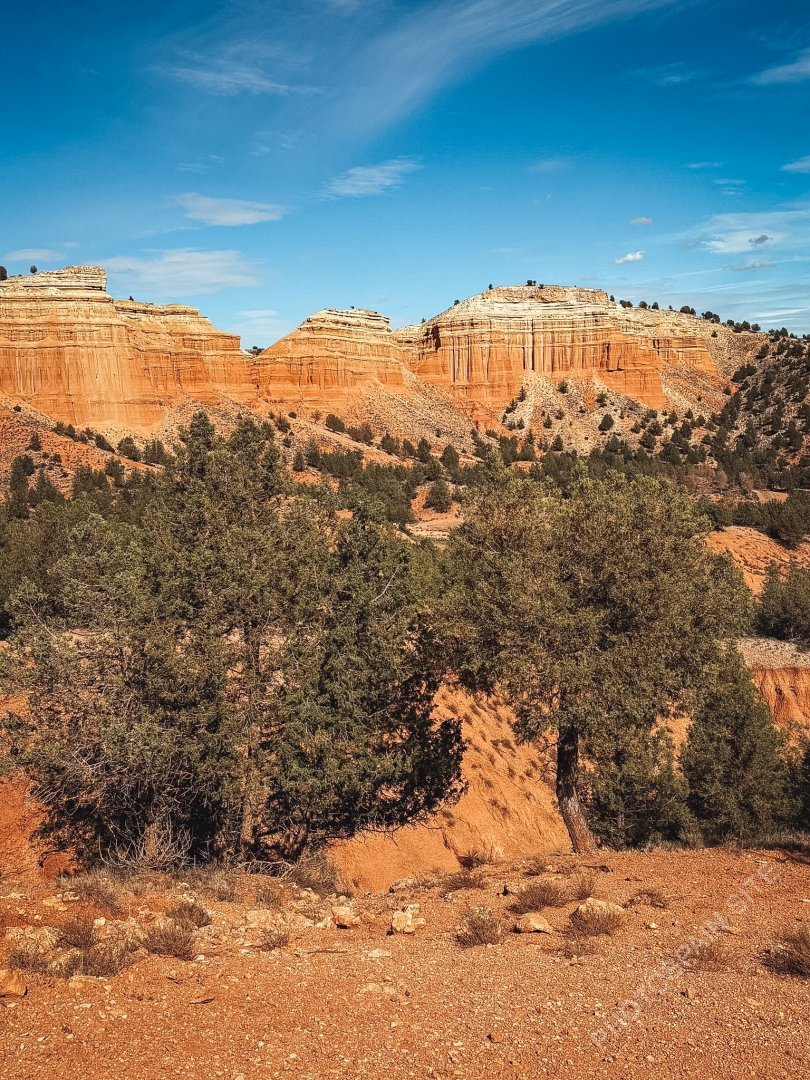
Erosion has created striking formations: in some places, the walls rise like towering cliffs; in others, they break into narrow grooves and folds. Depending on the light, the ground changes colour, ranging from deep brick red to pale terracotta and sandy tones.
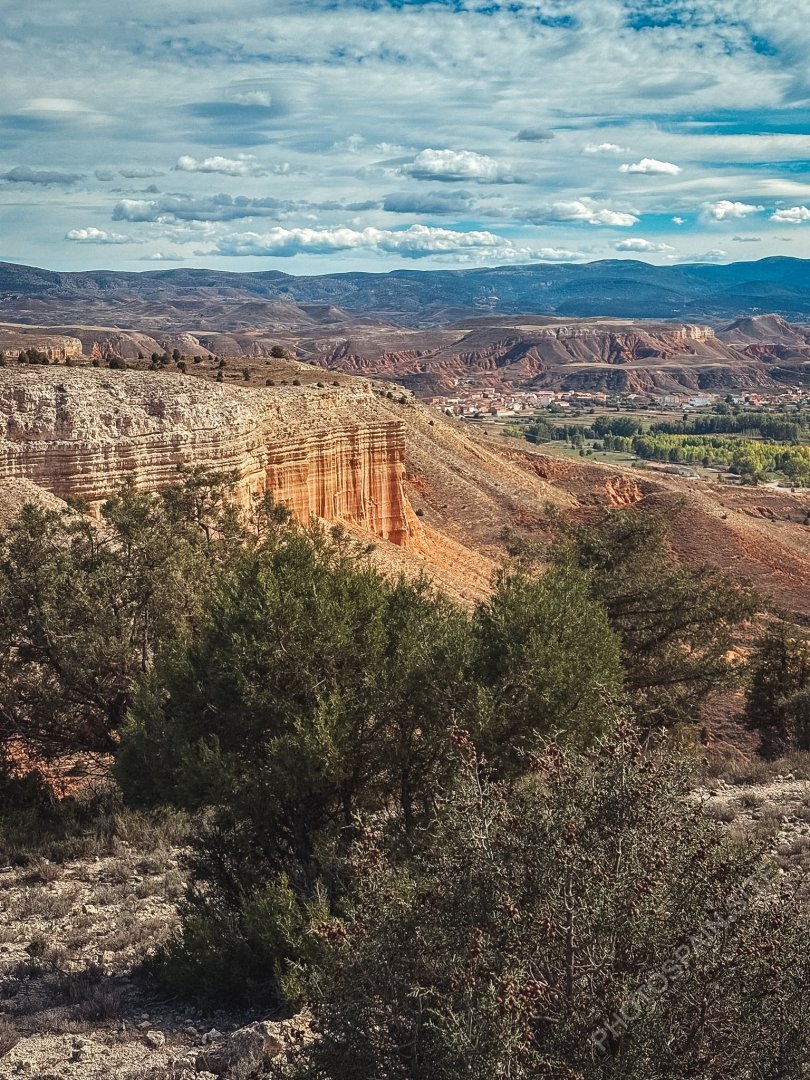
The landscape looks particularly impressive beneath the blue sky and against the surrounding fields. On dry days, the area feels open and peaceful, with scenery reminiscent of the desert regions of the American Southwest.
Things to See and Do
Walk Among the Red Rocks
The main reason to visit is to see the canyon up close. As you follow the dry riverbed and nearby trails, new views emerge: tall clay walls, narrow ravines, curved slopes and clearly visible layers of rock.
You do not need to cover the entire area to enjoy your visit. A short walk through the accessible sections of the ravine is enough to appreciate the scale of the landscape and take photographs from different viewpoints.
The Best Photography Spots
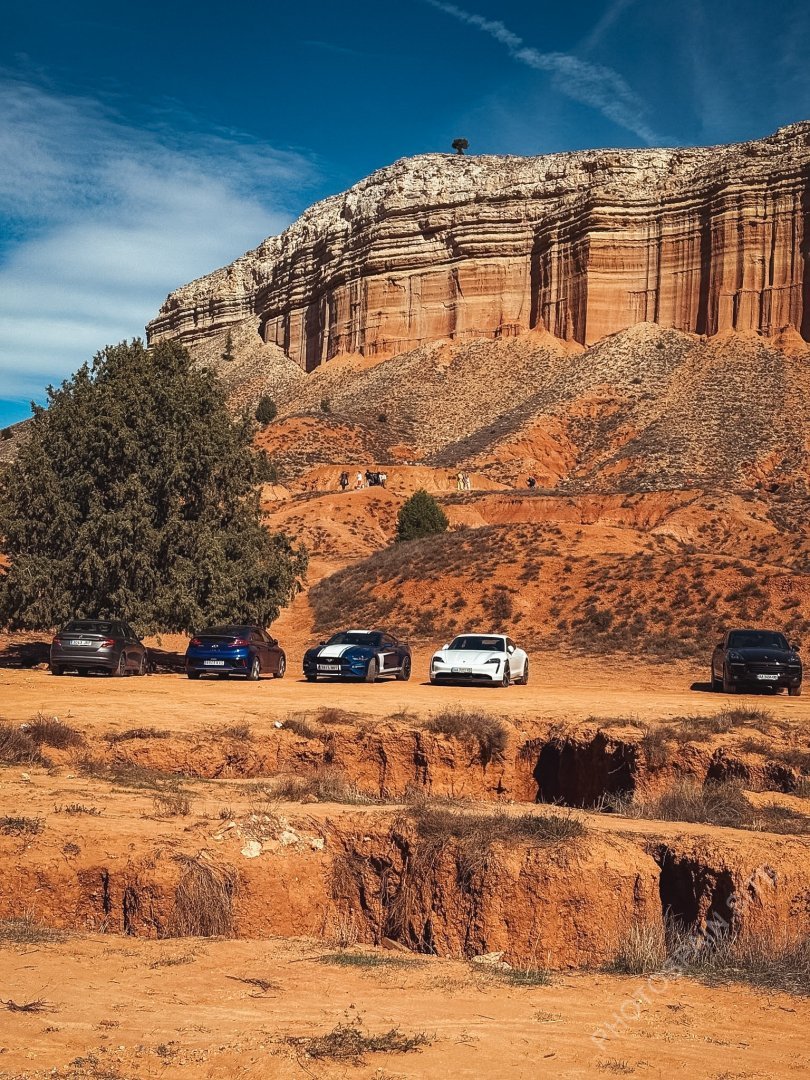
The Red Canyon is particularly appealing for landscape photography. The contrast between the red earth and blue sky, the lines of the ravines, the folds in the rock walls and the silhouette of a person against the cliffs all offer striking compositions.
The best time for photography is in the morning or late afternoon, when angled sunlight brings out the shapes and textures of the terrain. At midday, the light can be harsh, with very little shadow.
A wide-angle lens is ideal for capturing the overall scenery, while a standard or telephoto lens works well for details. Even a smartphone can produce impressive images thanks to the landscape’s unusual colours and geometric shapes.
Panoramic Views of the Canyon
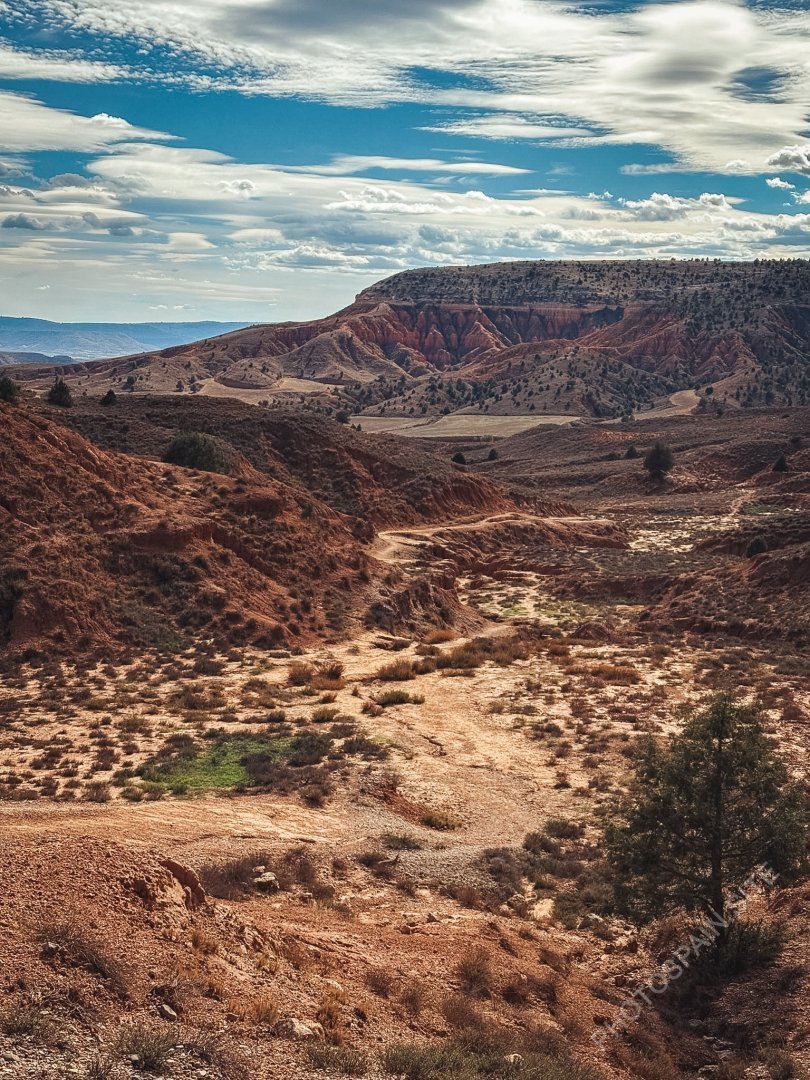
If you want to explore beyond the base of the cliffs and appreciate the wider landscape, consider a longer route in the Muela de Teruel area. From elevated viewpoints, you can see the cliffs, ravines and dry valleys stretching across the terrain.
However, not every path shown on maps is an official or publicly accessible trail. Restrictions may apply around the canyon and the nearby Barranco de Valdeciervos due to private land. Before setting out, check the current signs and avoid entering restricted areas.
How to Get to the Red Canyon
The Red Canyon is located near Teruel, in the province of the same name, within the autonomous community of Aragon. The easiest way to get there is by car.
- From Teruel: take the N-330 towards Cuenca. Use the Rambla de Barrachina area, a few kilometres from the city, as your reference point.
- Parking: visitors generally leave their cars near the access tracks, where permitted by road signs and local conditions. Do not expect a purpose-built official car park.
- On foot: from where you park, continue towards the dry riverbed and red rock formations. The length of the walk depends on the route you choose and how far you want to explore.
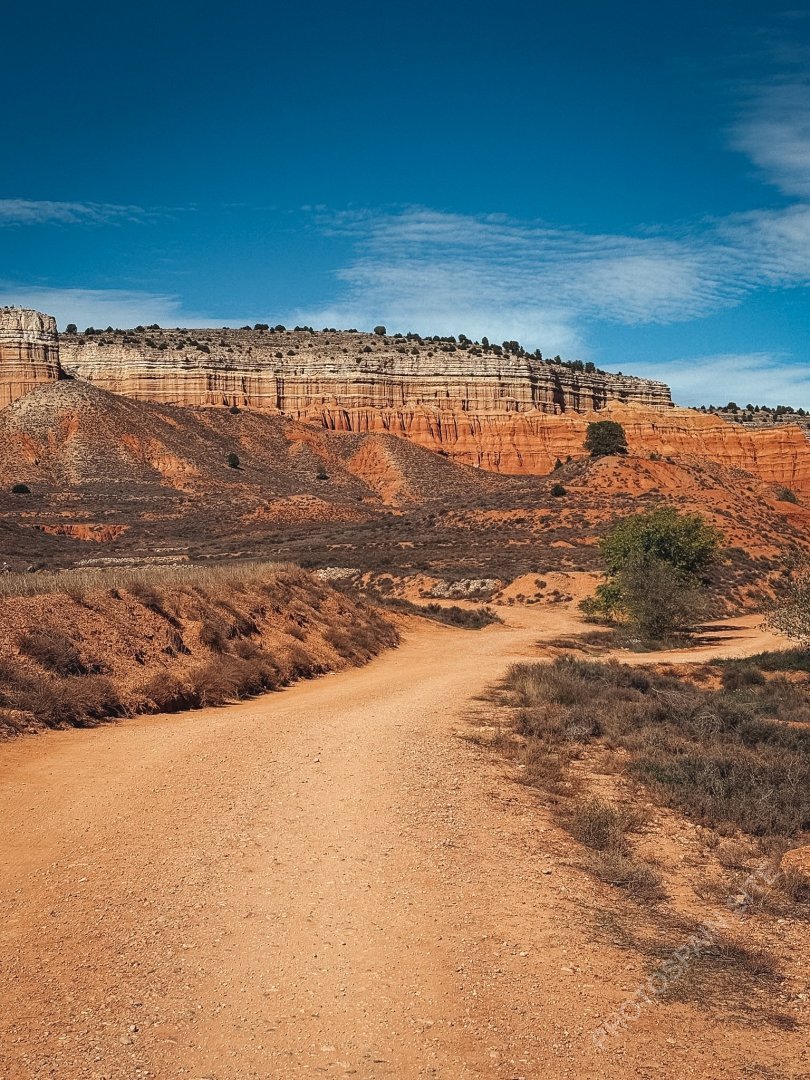
Before travelling, check the latest route information and access conditions. Dirt roads can become difficult to navigate after rain.
When Is the Best Time to Visit?
Spring and autumn are the most comfortable seasons for walking. Temperatures are generally milder, and in spring the red cliffs can create a striking contrast with the surrounding green fields.
Summer can be extremely hot. There is very little shade in the open areas, so it is best to visit early in the morning or later in the afternoon.
After heavy rain, it is best to postpone your visit. Clay surfaces become slippery, and dry riverbeds and ravines can be dangerous if water suddenly flows through them. Keep away from unstable cliff edges and slopes prone to rockfalls.
What to Bring
- Comfortable shoes with non-slip soles.
- Plenty of drinking water.
- A hat, sunscreen and sunglasses.
- A phone with an offline map downloaded in advance.
- A camera or smartphone.
- A lightweight jacket for cooler weather.
The area has little tourist infrastructure, so do not expect cafés, toilets, drinking fountains or equipped rest areas right by the canyon.
Is the Red Canyon Worth Visiting?
The Red Canyon is an appealing destination for anyone who enjoys unusual natural landscapes, walking and photography. Its main attraction is its dramatic terrain and the feeling of being surrounded by wild, almost desert-like scenery just a short distance from a city.
You can make it a quick stop lasting an hour or two or include it in a longer itinerary around Teruel. Do not expect a fully equipped tourist park with marked trails and developed viewpoints: the charm of this place lies in its natural landscape, which should be explored carefully and respectfully.
If you want to discover a different side of Spain, away from the beaches and Mediterranean coast, with dry, rugged and remarkably photogenic scenery, the Red Canyon deserves a place on your Aragon itinerary.
The Red Canyon of Teruel photos
Information
How to get there: By any car
Date of visit: October 2026
GPS coordinates: 40.316362, -1.140938
Price: free


